全部播客 · 系列

吃透语言模型

语言模型系列的完整路线图:架构、扩展、优化、微调、RLHF、开源模型与稀疏专家——连同贯穿其中的心智模型和专家之间的分歧。

45 · 45 期含音频 · Updated 2026年7月19日

单集列表

Flat 2D illustration of a mint route ribbon winding through small cream station panels across a dark navy workspace — a blueprint with a lens, a rising curve chart, linked processor tiles, a stitched patch, a loop arrow, and an open vault — with three small figures beside a compact server rack at the start.

SE0 · 2026年5月1日 · 11:21

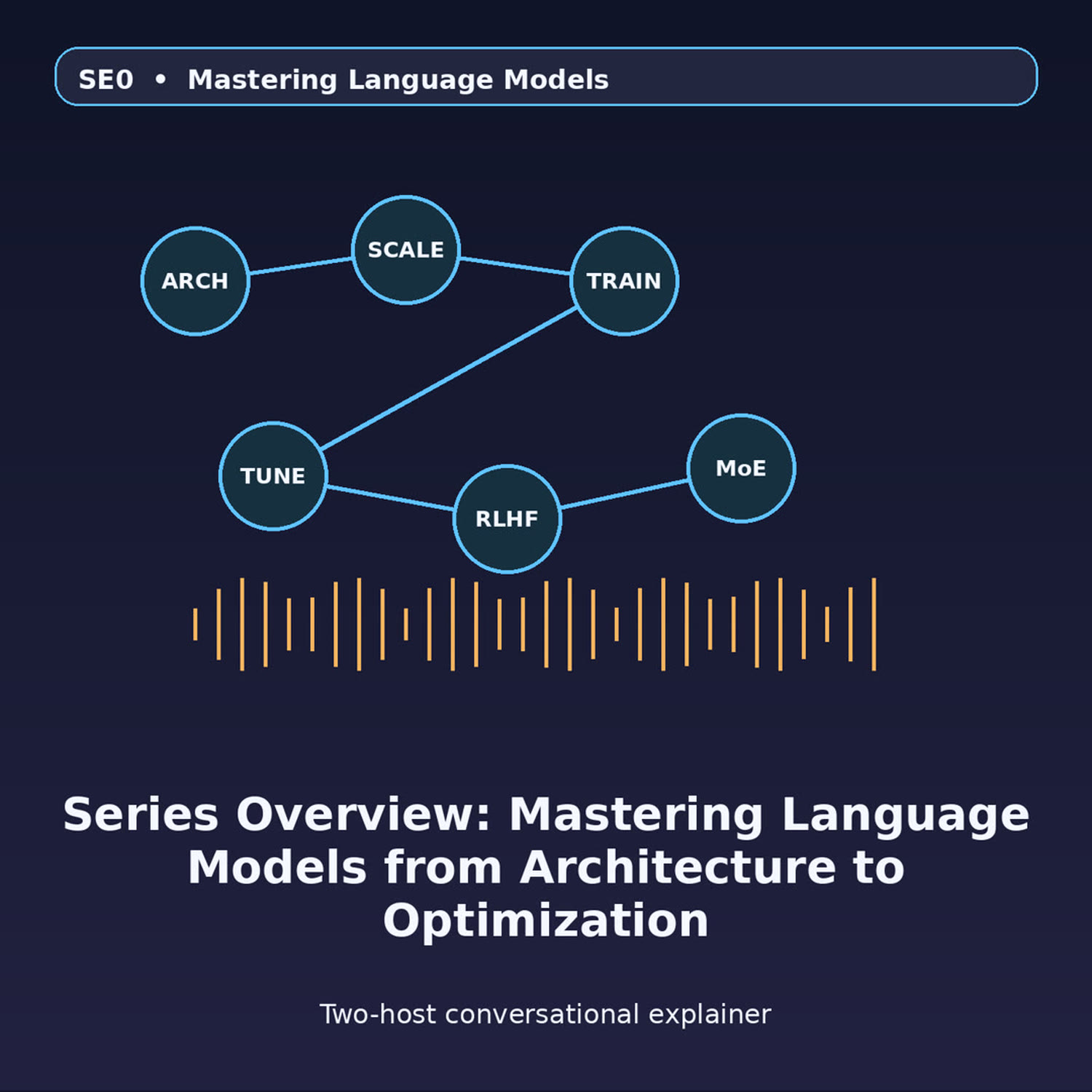
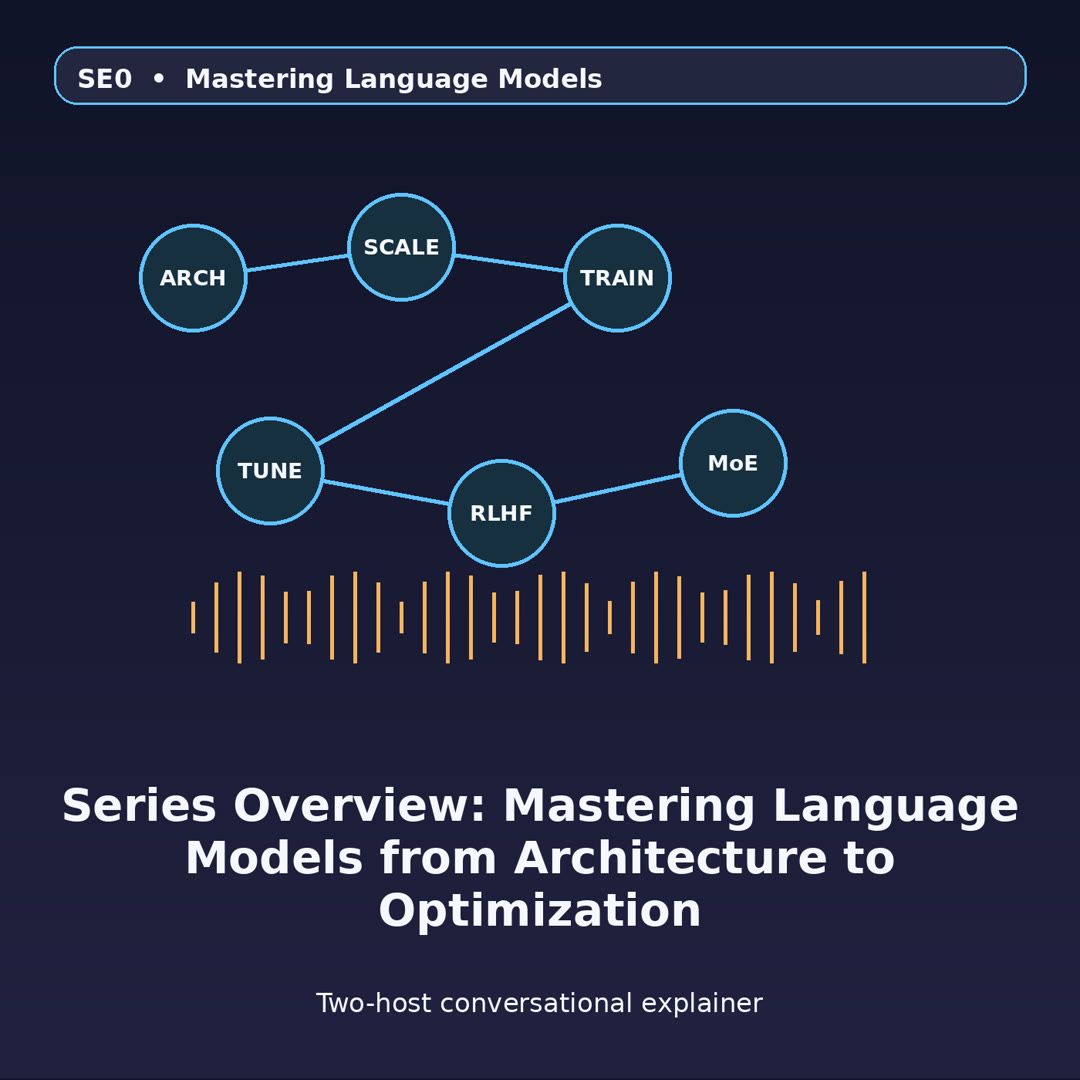
Series Overview — Mastering Language Models: From Architecture to Optimization

The map of the journey: shared expert mental models, the field's real fights, and the forks every LLM builder faces

节目笔记

Maya and Leo open the series with the map: seven stops from the Transformer blueprint to the machinery under massive models, anchored by a three-person startup building an insurance-claims assistant on eight GPUs. They lay out the mental models every LLM expert shares — trust curves, find the bottleneck, separate capability from behavior — then stage the field's cleanest fight on air: bigger models versus more data, from OpenAI's 2020 scaling curves to Chinchilla's flip to the serving-cost era that ran past both camps. Plus trailers for the live attention debate and the alignment fight to come.

来源材料

完整单集页面
Flat 2D illustration of a long contract unrolled as a ribbon of cream panels across a dark navy workspace; a lens hovers above with amber threads arcing between distant panels, a faded chain of hands passes a single note card along the bottom, and a gate splits a mint conveyor into a card-stacking lane and a slim single-card lane.

T1E0 · 2026年5月1日 · 13:44

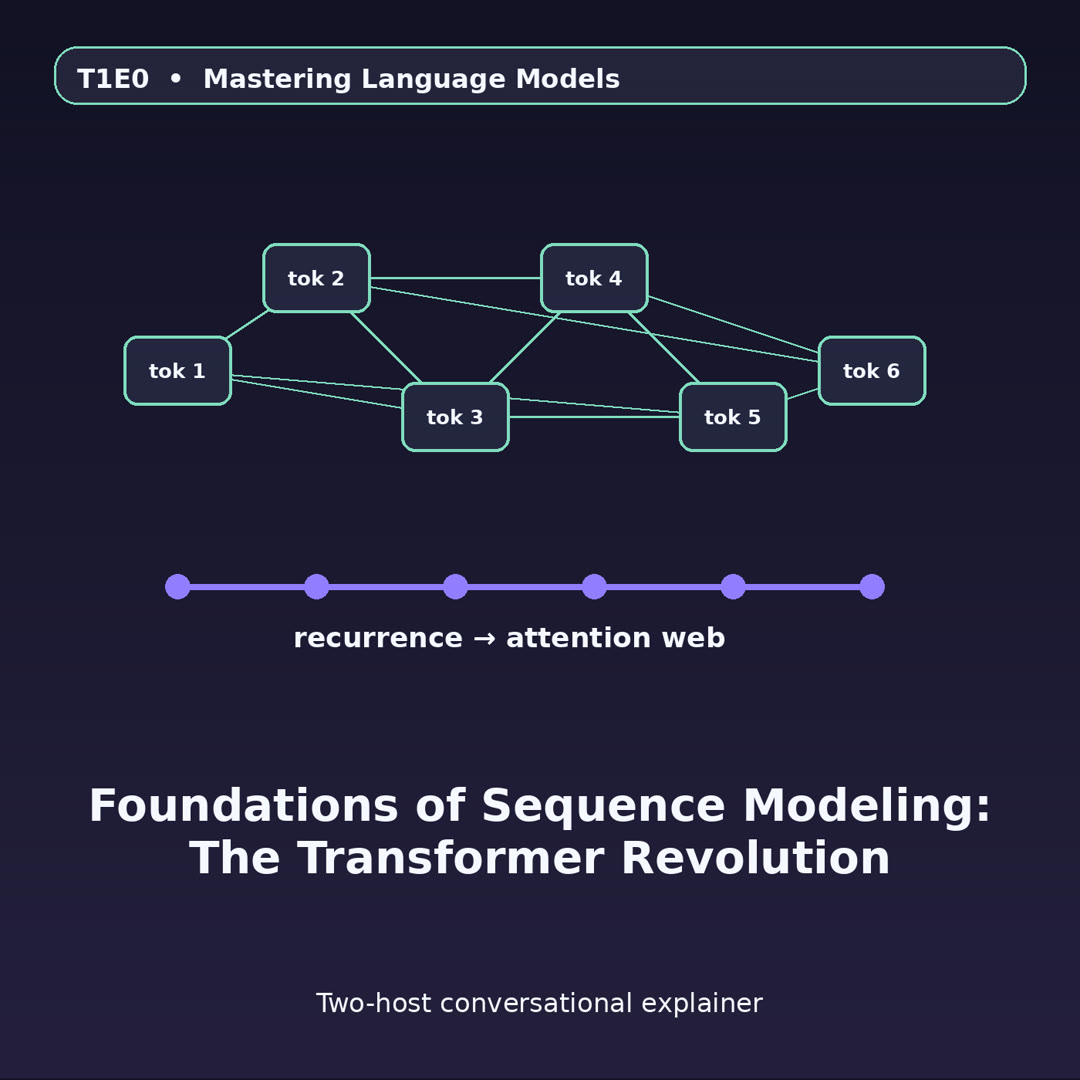
Foundations of Sequence Modeling: The Transformer Revolution

How self-attention replaced the relay — and why the field is now arguing about the bill

节目笔记

Topic 1 opens the series at the foundation: how 'Attention Is All You Need' replaced step-by-step recurrence with self-attention — every token seeing every other token in one parallel hop — and why that single move made large-scale pre-training possible. Maya and Leo build the topic's shared mental models (attention as content-based lookup, the two bills of training versus serving, architectures as hardware bets), then stage the field's live fight on air: exact full attention versus Kimi Linear's expressive hybrid, with the KV cache and million-token contexts as the battleground. A running law-firm contracts assistant grounds every turn.

来源材料

完整单集页面
Flat 2D illustration of a long contract unrolled as a ribbon of cream panels across a dark navy workspace; a fan of eight small lenses hovers above, each casting an amber thread to a different distant panel, a faint wave-pattern watermark runs beneath the ribbon, and one panel near a mint gate is half-covered by a sliding shade with threads reaching only backward.

T1E1 · 2026年6月13日 · 11:33

Attention Is All You Need

Inside the 2017 paper that deleted recurrence, kept the lookup, and rebuilt sequence modeling

节目笔记

主题一从 2017 年那篇论文讲起,逐页读完。Maya 从它要摆脱的问题——循环结构的串行瓶颈——出发把这台机器搭起来,Leo 则检验其中有多少说法今天仍然成立。

The first deep dive of the series opens the 2017 Transformer paper itself. Maya walks the machine in three stations — the Matchmaker (query-key-value lookup), the Committee (eight specialist attention heads), and the Chord (wave-stamped word order) — while Leo brings the receipts: a two-point BLEU jump over every published system, base-model training in about twelve hours on eight GPUs, and an ablation table that proves the committee earns its seat. Then the skeptic's pass: what the paper never claimed, why 'foundation of modern AI' was the field's later inference, and how the authors wrote the quadratic-cost limitation — the seed of the linear-attention debate — into their own final page. The running law-firm contracts assistant grounds the mechanism throughout.

来源材料

完整单集页面
Flat 2D illustration of a long contract unrolled as a ribbon of cream panels across a dark navy workspace; beside it, a fixed slate board with a grid of cyan and amber marks is half-swept by an eraser, a row of small dials lines its edge, a stack of memory cards stands at quarter height, and every fourth gate on a mint conveyor is drawn heavier with amber threads arcing to distant ribbon panels.

T1E2 · 2026年6月13日 · 13:48

Kimi Linear: An Expressive, Efficient Attention Architecture

The 2025 hybrid that rations full attention — a fixed-size memory with a per-channel eraser, and the fight over whether it settles the linear-attention argument

节目笔记

Topic 1 closes with the 2017 paper's confession answered. Kimi Linear, from Moonshot AI's Kimi Team, claims a first: a mostly-linear attention architecture that beats full attention under matched training runs. Maya builds the machine in four landmarks — the Board (a fixed-size memory that never grows), the Eraser (the delta rule's overwrite-don't-pile update), the Knobs (a learned forgetting dial per feature channel, which doubles as the position signal), and the Floorplan (three linear layers for every one full-attention layer, with the full layers carrying no position encoding at all). Leo brings the history of linear-attention promises and prosecutes the fair-fight claim — author-chosen benchmarks, 48-billion-parameter scale, full attention 'kept on retainer' — before conceding what the architecture genuinely buys: up to seventy-five percent less KV cache and roughly six-times-faster decoding at a million tokens. The running law-firm deal-room assistant grounds the stakes, and the hosts land on what would actually settle the argument: replication outside the lab.

来源材料

完整单集页面
Flat 2D editorial illustration in a dark navy workspace: a vertical stack of cream layer trays stands beside a wide contract ribbon, and a selector lens sends amber arcs to a few earlier trays; a blurred equal-weight pile sits behind it while grouped summary trays feed a small memory tray and mint conveyor gate.

T1E3 · 2026年7月19日 · 12:57

注意力与残差

Why later layers should select earlier representations instead of inheriting one ever-growing additive pile

节目笔记

主题一的收尾。Maya 把 transformer 重新理解为一条共享总线,而不是一叠层——每个模块读取当前的累计值,写回一个修正量,从不覆盖前面的结果。

Standard PreNorm residual streams add every layer output with the same fixed weight, so hidden magnitude grows and each new update becomes relatively diluted. Maya and Leo follow the paper's proposed replacement: attention across depth, where a learned pseudo-query selects among RMS-normalized earlier representations. A law-firm contracts assistant grounds the move from an additive pile to a selector and then to block summaries. The hosts also unpack the cache-based pipeline and two-phase schedule that make Block AttnRes practical, debate whether the architectural gain justifies the systems burden, and calibrate the authors' reported scaling and 48B-model results against the limits of independent evidence.

来源材料

完整单集页面
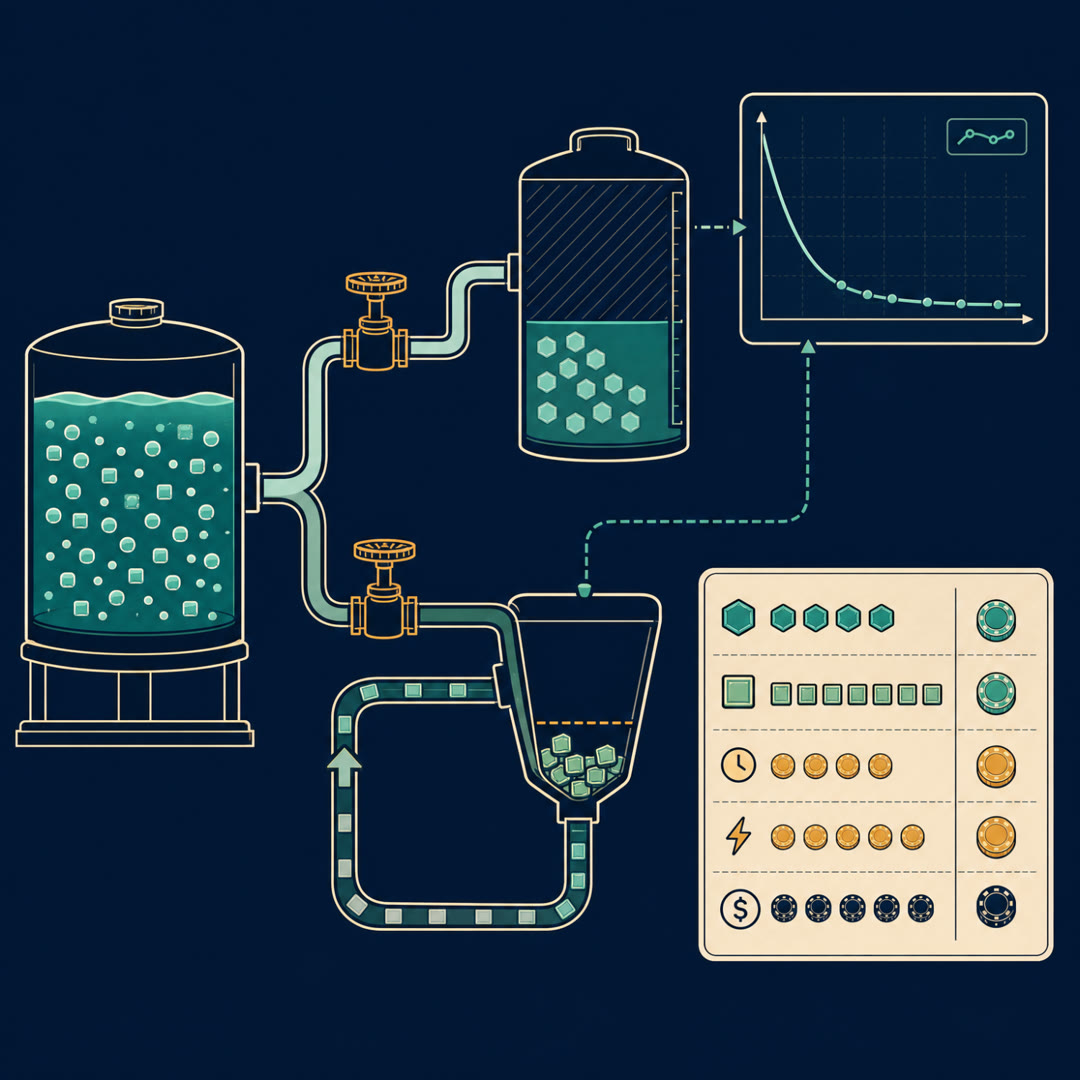
Flat-vector illustration of a compute reservoir feeding two valves that fill a model vessel and a token hopper, with a loss-curve panel and a cost ledger nearby.

T2E0 · 2026年5月1日 · 14:16

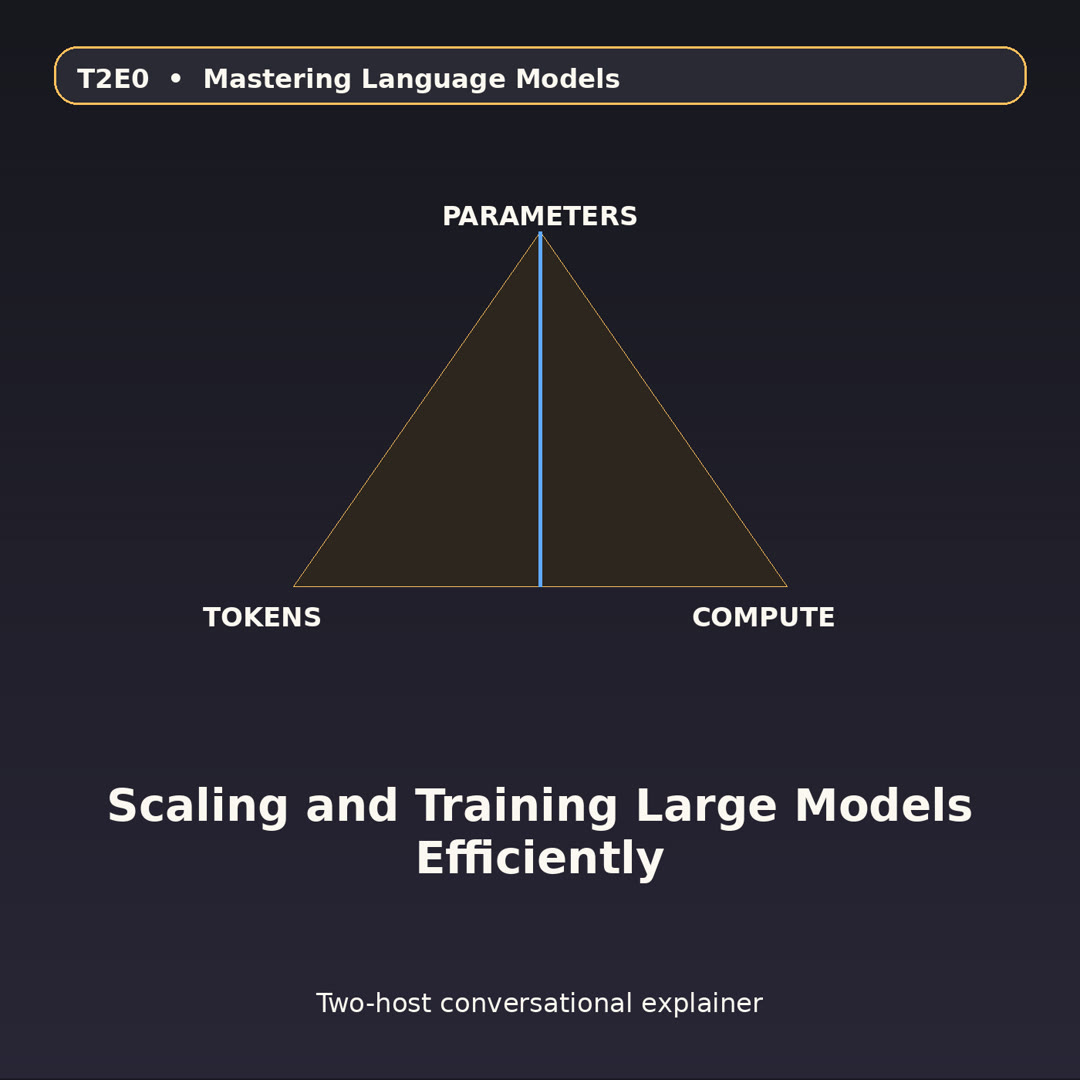
Scaling and Training Large Models Efficiently

Parameters, tokens, and compute: how to spend one training budget

节目笔记

Topic 2 opens with the question the Transformer made urgent: once you can build big, how should one fixed training budget be split between model size, training tokens, and data quality? Maya and Leo stage the scale-first versus compute-optimal argument in its strongest forms, introduce the smooth-curve predictability of scaling laws, the four interacting knobs of scale, and the two-bills view of training versus inference cost — then map the three deep-dives: Kaplan's scaling laws, Chinchilla's budget correction, and the data-constrained regime where fresh text runs short.

来源材料

完整单集页面
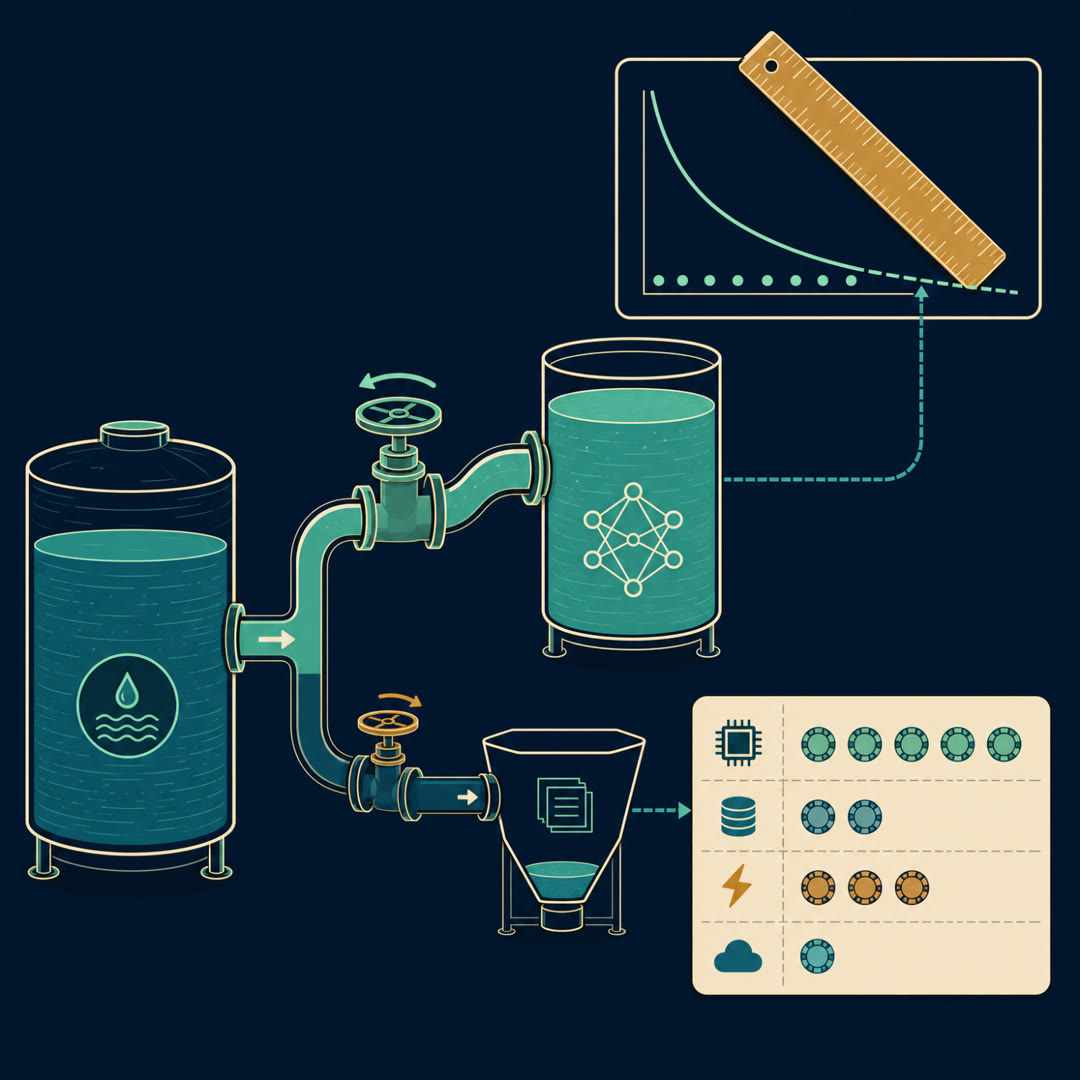
Flat-vector illustration of a compute reservoir feeding a wide-open valve into a nearly full model vessel beside a low token hopper, while a ruler on a plotting panel extends a dotted loss curve into a dashed forecast.

T2E1 · 2026年6月13日 · 14:04

Scaling Laws for Neural Language Models

The Kaplan curves: when small runs forecast giant ones

节目笔记

Deep dive into Kaplan et al.'s Scaling Laws for Neural Language Models (2020), the paper that made giant training runs forecastable. Maya and Leo walk the three landmarks: the ruler — loss falls along smooth power laws in parameters, data, and compute, so cheap pilot runs predict frontier runs; the early exit — larger models learn more per token, so a fixed budget should buy a huge model trained on modest data and stopped before convergence; and the edge of the map — loss is a proxy, curves are fitted to a measured range, and averages can hide brittle rare-task behavior. They stage the real argument between curve-trusting planners and loss-as-proxy skeptics, and set up Chinchilla's revision next episode.

来源材料

完整单集页面
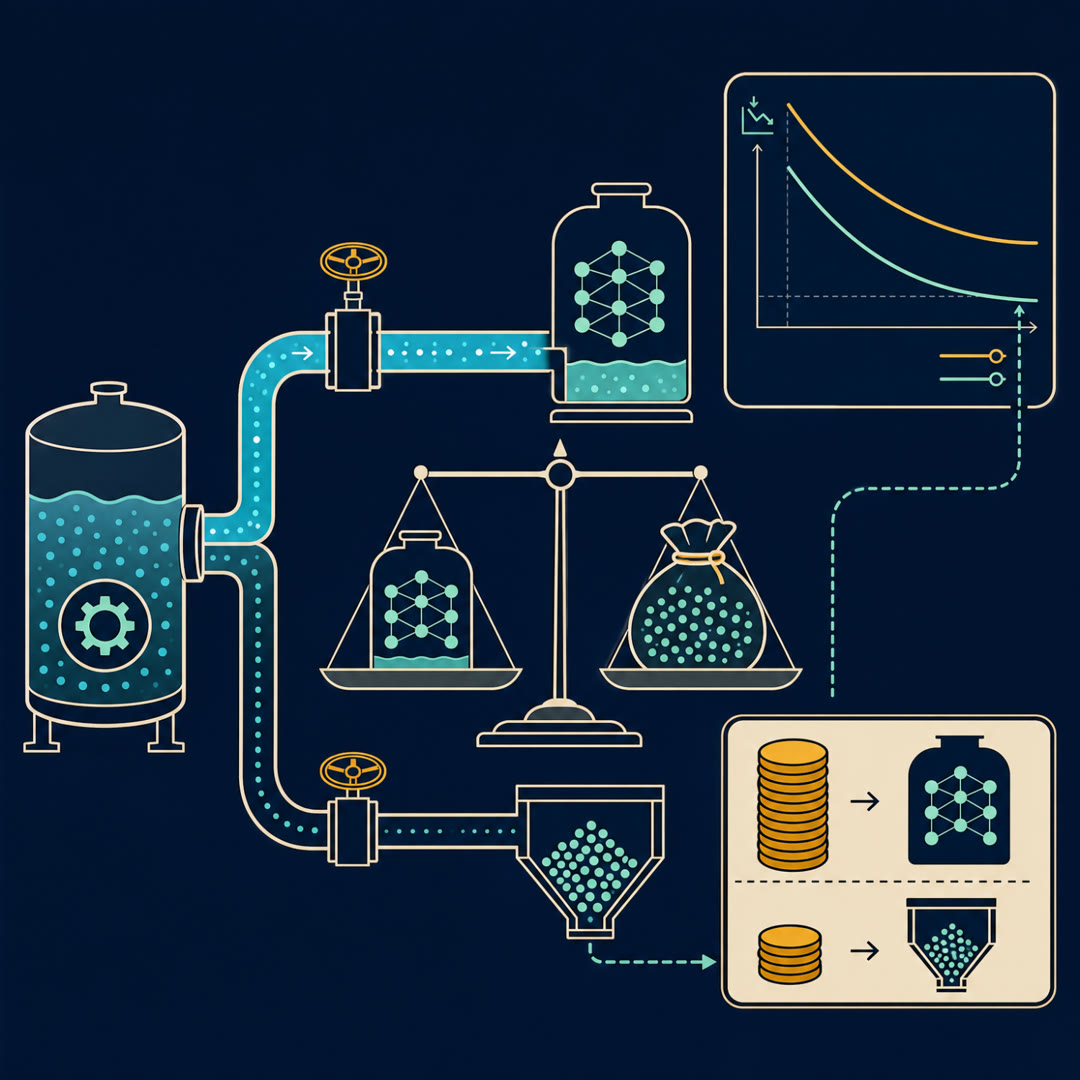
Flat-vector illustration of a compute reservoir and valve manifold beside a level balance scale weighing a small model vessel against a full token sack, with two loss curves on a plotting panel and uneven cost-chip stacks on a ledger.

T2E2 · 2026年6月13日 · 14:12

Training Compute-Optimal Large Language Models

The Chinchilla revision: double the model, double the tokens

节目笔记

Deep dive into Hoffmann et al.'s Training Compute-Optimal Large Language Models (2022) — the Chinchilla paper that re-measured the parameters-versus-tokens trade-off and found a generation of large models undertrained. Maya and Leo walk the three landmarks: the rebalance — under a fixed compute budget, model size and training tokens should scale roughly together; the rematch — a seventy-billion-parameter model trained on far more data outperforming much larger models like Gopher at a comparable budget, while also being far cheaper to serve; and the fine print — tokens are not interchangeable, loss is not a task evaluation, and the balanced recipe points straight at a data bottleneck. They argue out whether frontier labs are still right to train past the optimum, and set up the data-constrained regime next episode.

来源材料

完整单集页面
Flat-vector illustration of a compute reservoir and valve manifold where a nearly empty token hopper recycles fading token chips through a return loop, beside a flattening loss curve and a partly unfilled model vessel.

T2E3 · 2026年6月13日 · 13:59

Scaling Data-Constrained Language Models

When fresh text runs out: repetition, its discount, and the price of filling the shelf

节目笔记

Deep dive into Muennighoff et al.'s Scaling Data-Constrained Language Models (2023) — the paper that asks what happens when the balanced scaling recipe demands more fresh, high-quality text than exists. Maya and Leo walk the usable shelf (why the responsibly trainable internet is far smaller than the internet), the second pass (epochs and repetition), and the repetition discount (a few passes are surprisingly close to fresh data before value decays — and excess parameters are discounted too). Then they argue out the workarounds the field is split over: relaxed quality filters, code data, synthetic data and its verification problem, and whether scarcity is even universal once interaction data and retrieval count. Closes Topic 2's arc from predictable scaling through balanced budgets to data economics.

来源材料

完整单集页面
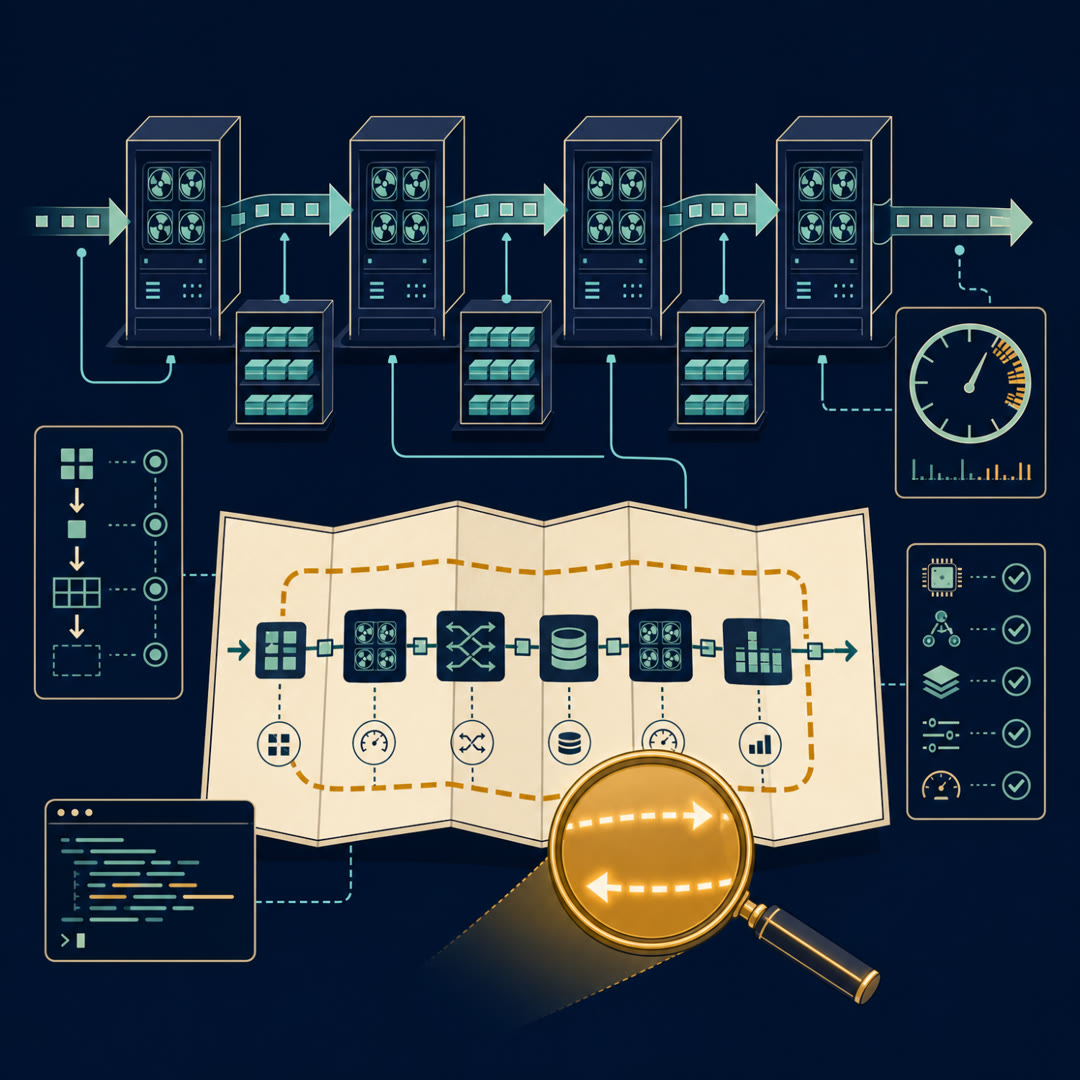
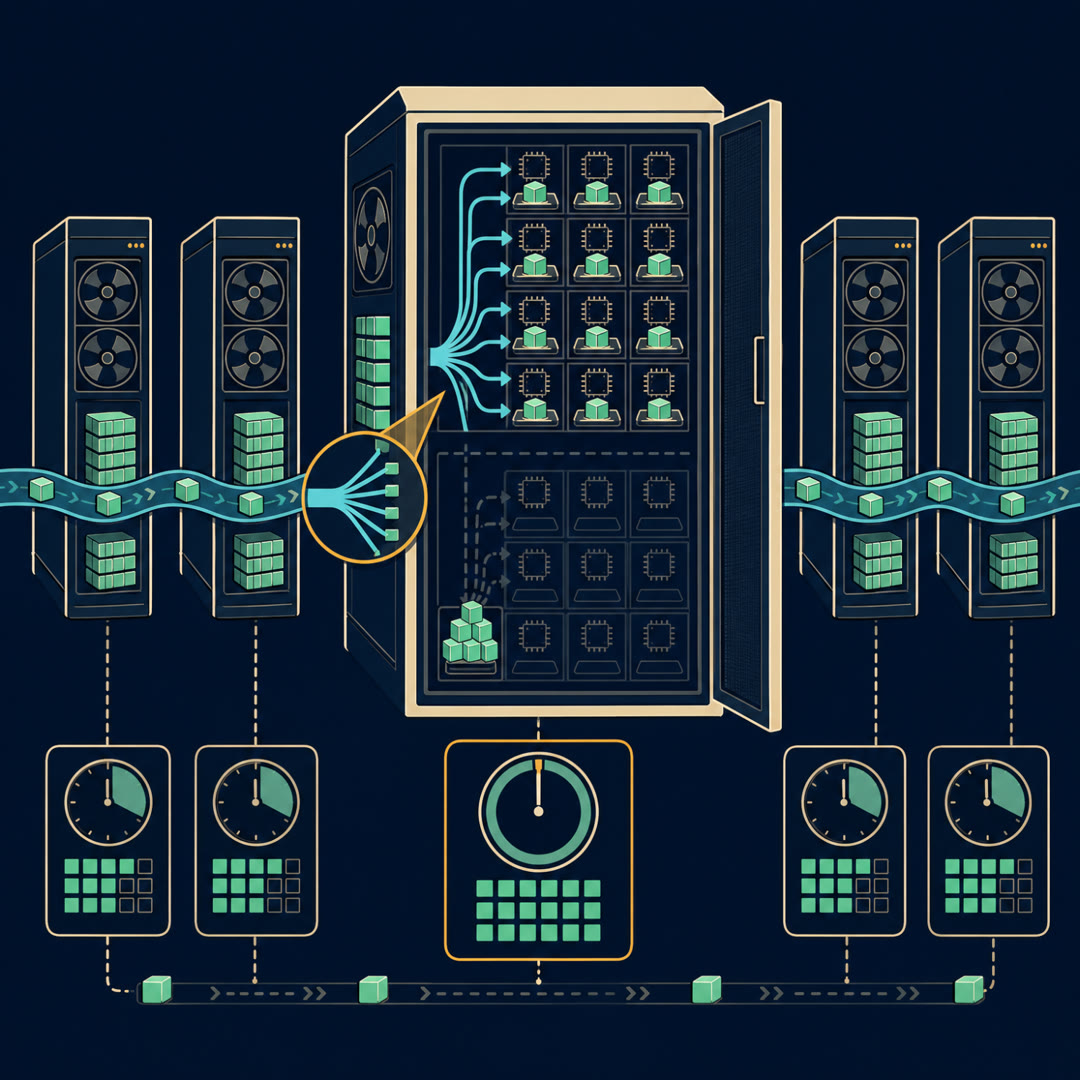
Flat 2D editorial illustration of a row of machine cabinets linked by cyan ribbons, with a fold-out route map in the foreground under an amber lens and a clock gauge showing idle gaps.

T3E0 · 2026年6月13日 · 12:35

Advanced Distributed Training: Overcoming Bottlenecks

The bottleneck tour: memory, communication, bubbles, and the last inch of the GPU

节目笔记

Topic 3 opens with a map of the bottlenecks that decide whether a hundred-billion-parameter model can be trained at all: model-state memory, activation memory, GPU-to-GPU communication, pipeline bubbles, and the data movement inside a single chip. Maya and Leo stage the field's real argument — partition the model versus shard the redundant states — introduce the four levers (copy, slice, split, shard), and set up the diagnostic habit behind GPipe, Megatron-LM, ZeRO, FSDP, and FlashAttention: find the bottleneck first, then choose the technique.

来源材料

完整单集页面
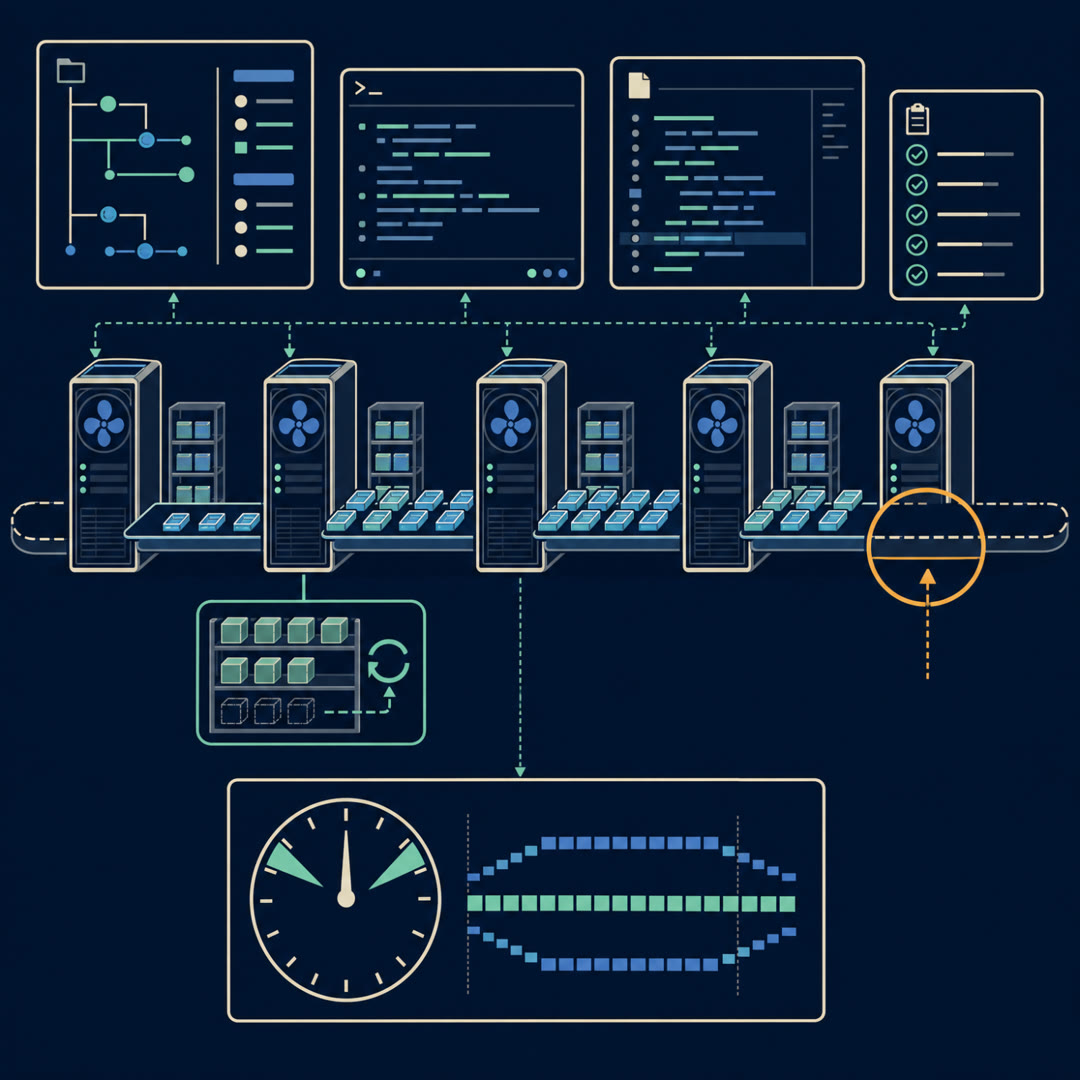
Flat 2D editorial illustration of machine cabinets linked by a conveyor ribbon carrying a staggered stream of small trays, dense in the middle and empty at the ends, with an amber lens over the empty stretch and a half-empty memory shelf with a redo arrow.

T3E1 · 2026年6月13日 · 11:55

GPipe: Efficient Training of Giant Neural Networks Using Pipeline Parallelism

Slice the model into floors, stream the trays, and mind the bubble

节目笔记

The first deep dive of Topic 3 takes on the bluntest bottleneck: the model does not fit on one device. Maya and Leo unpack GPipe's move — slice the layer stack into stages, stream microbatches through them like trays down a sandwich line, and re-materialize activations instead of storing them — then stage the field's real argument between pipeline and tensor parallelism: idle bubbles versus constant communication, reach across servers versus fully busy chips. Plus the trap of equal-layer splits, and the four measurements that tell you whether a pipeline is actually parallel or only looks that way on a diagram.

来源材料

完整单集页面
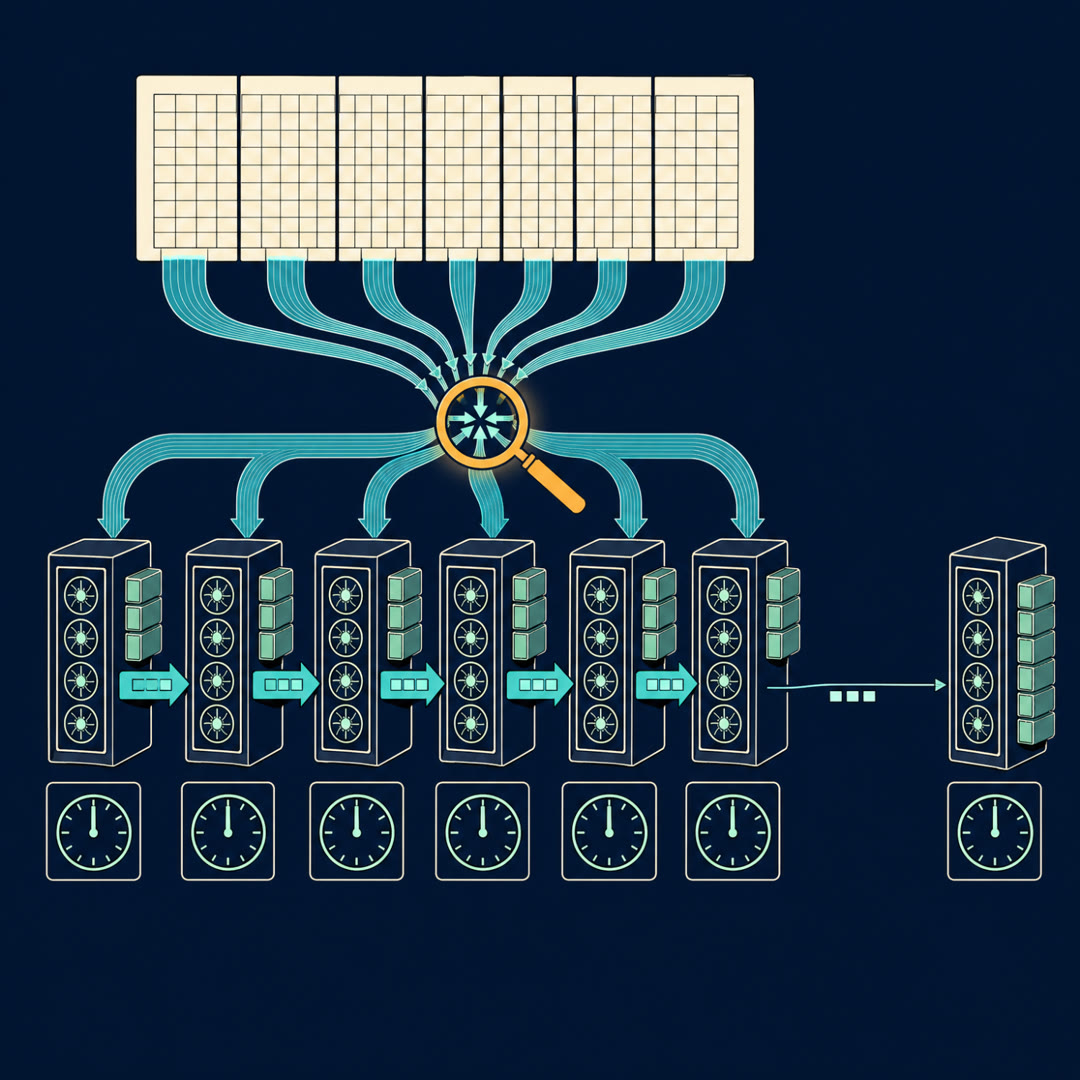
Flat 2D editorial illustration of a large matrix panel sliced into vertical stripes feeding separate machine cabinets by ribbon, the stripes merging again at a junction node under an amber lens, with full clock dials on every cabinet and one thin cable trailing to a distant cabinet.

T3E2 · 2026年6月13日 · 13:43

Megatron-LM: Training Multi-Billion Parameter Language Models Using Model Parallelism

Cut the matrix along its seams, and let the algebra decide the conversation

节目笔记

Episode two of Topic 3 goes inside the layer. When a single Transformer layer is too big for one chip, no pipeline schedule can save you — so Megatron-LM cuts the matrix multiplications themselves across GPUs, column-wise then row-wise, with an all-reduce 'huddle' only where partial results must meet. Maya and Leo walk the feed-forward and attention splits with their sixty-four-GPU team, then swap chairs and restage the tensor-versus-pipeline fight from the other side: no bubbles and graduate-student-readable code versus a conference call that never hangs up and a ceiling at the server chassis. Plus the four dials to check when tensor-parallel throughput disappoints.

来源材料

完整单集页面
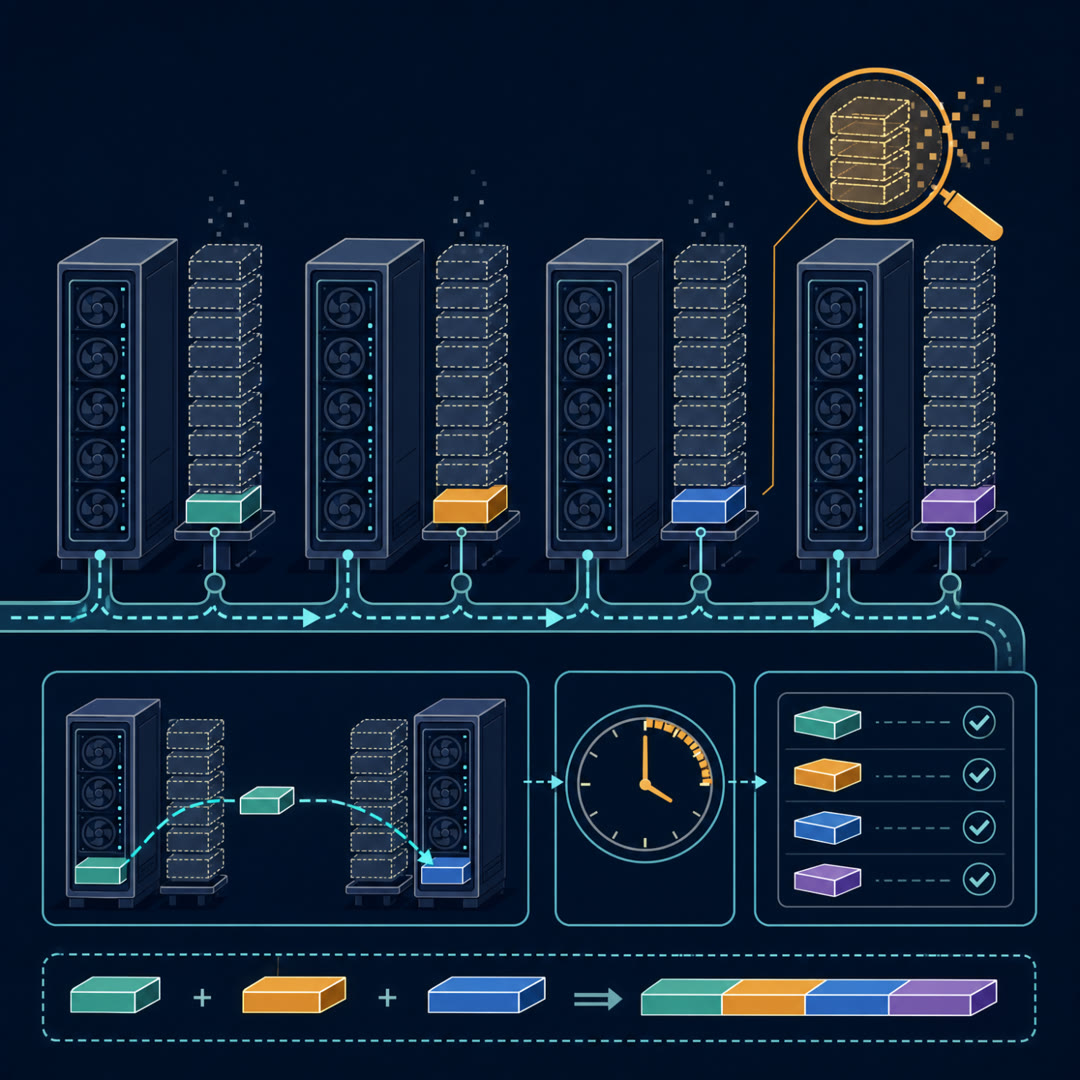
Flat 2D editorial illustration of a row of machine cabinets where tall duplicated memory-block stacks fade away beside each cabinet, each keeping one solid distinct slice, while a conveyor ribbon delivers a single borrowed block under a clock gauge and an amber lens highlights a fading duplicate stack.

T3E3 · 2026年6月14日 · 13:07

ZeRO: Memory Optimization Towards Training Trillion Parameter Models

Stop cutting the model — start sharing the copies

节目笔记

Episode three of Topic 3 stops cutting the model. After two episodes of pipeline and tensor surgery, ZeRO — the Zero Redundancy Optimizer — asks the almost-rude question: what if the real waste was never the math, but the copies? Maya and Leo open in a town where eight libraries stock identical collections and ledgers fatter than the books, then follow the sharding ladder — optimizer states, gradients, finally the parameters themselves — as memory turns from possession into scheduling. They stage the split-the-model versus shard-the-states argument with concessions on both sides, land on the paper's own answer (compose them), and close with the support-call diagnostic: six memory tenants, measured separately, and the question of whether the savings just moved into network time.

来源材料

完整单集页面
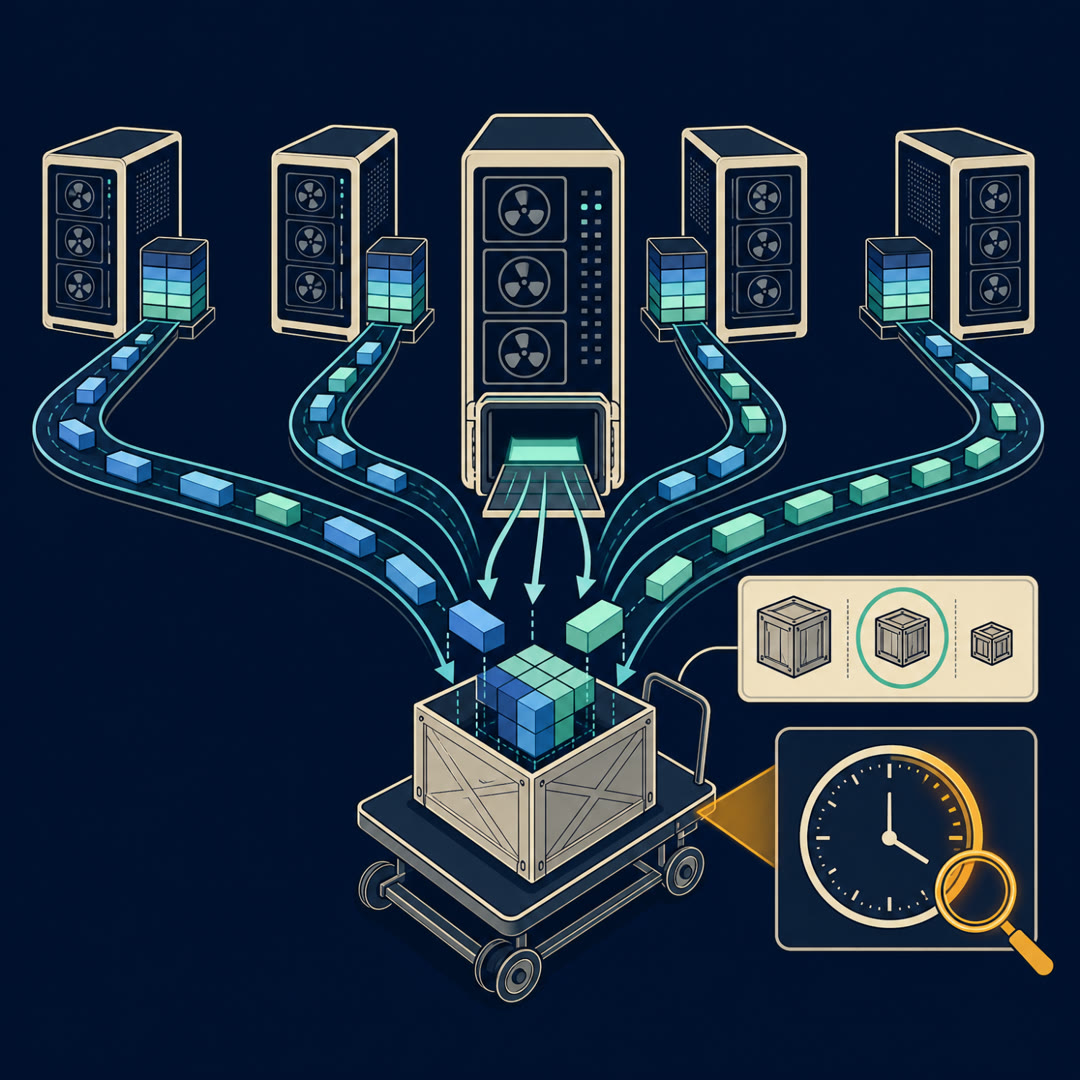
Flat 2D editorial illustration of a row of machine cabinets where a parts cart docks at one cabinet's open bay; a single crate on the cart is assembled from distinct block slices delivered by conveyor ribbons from the other cabinets' shelves, beside an icon panel of three crate sizes and an amber lens on a clock gauge.

T3E4 · 2026年6月14日 · 11:34

Fully Sharded Data Parallel: Faster AI Training with Fewer GPUs

Sharding grows up: ZeRO's idea as a daily PyTorch tool

节目笔记

Episode four of Topic 3 is the sequel to ZeRO's argument: what happens when sharding wins and moves into PyTorch as Fully Sharded Data Parallel. Maya and Leo open in a machine shop where no parts live at the bench — crates arrive exactly when a job needs them — and follow FSDP's loop of gathering full parameters for one wrapped block, computing locally, and letting the copy go. Then the four negotiations that decide whether the run gets faster or merely fits: crate size (wrapping policy), departure time (gather and prefetch), the recompute bargain (activation checkpointing), and the overflow annex (CPU offload). They weigh general-tool automation against hand-built parallel layouts, and close on the support-ticket diagnostic: memory measured by category, gathers checked against compute overlap, and the hard question of whether the pain just moved into network time.

来源材料

完整单集页面
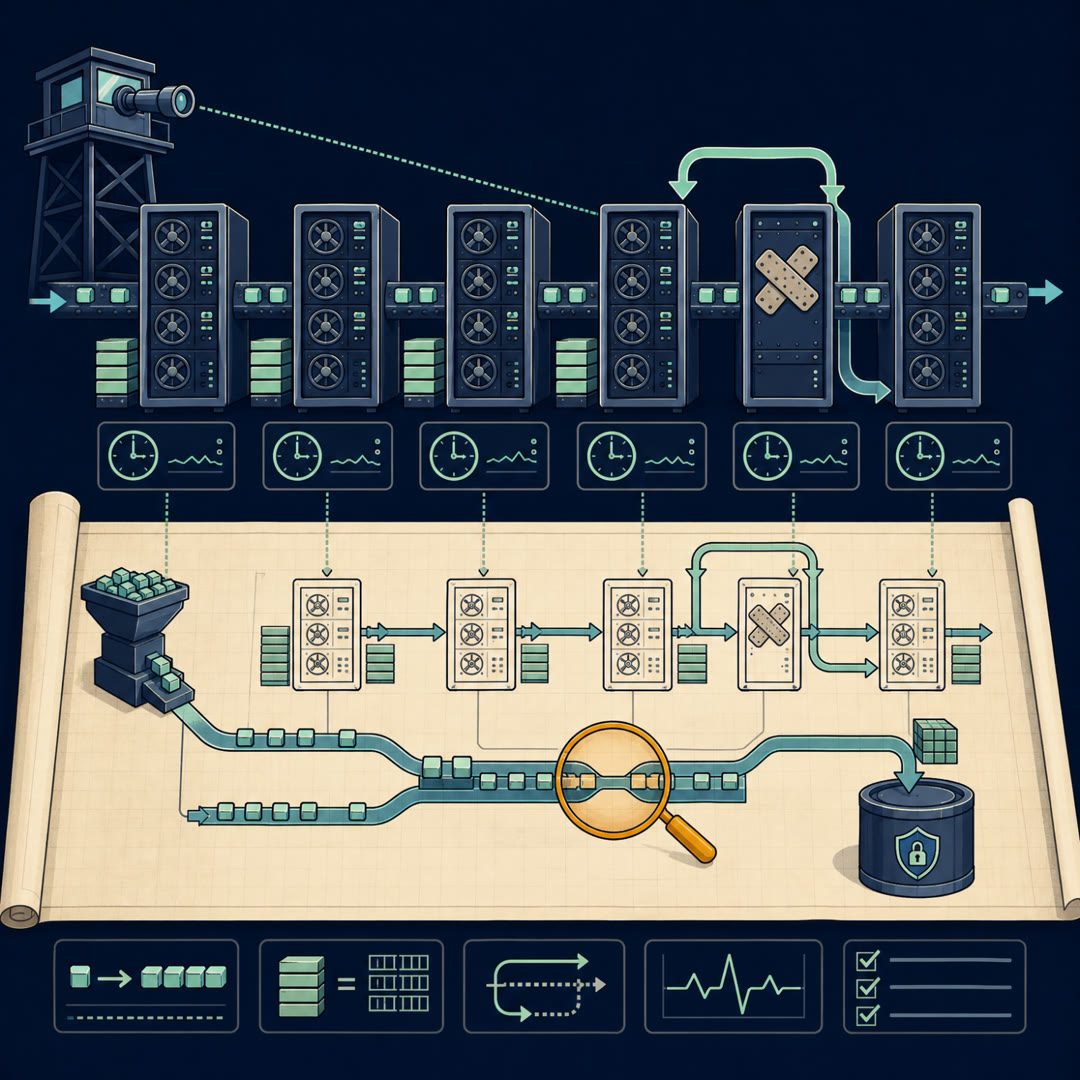
Flat 2D editorial illustration of a row of machine cabinets above a large unrolled blueprint chart mapping the whole system — a feeder hopper pouring packets onto a conveyor ribbon, a storage drum receiving a checkpoint block, a watchtower lens overlooking the ribbons, and one patched cabinet bypassed by a detour ribbon, with an amber lens on the narrowest ribbon segment.

T3E5 · 2026年6月14日 · 13:20

Research on Distributed Training Architecture for Large Scale Models for Natural Language Processing

The view from the whole port: composing parallelism, storage, scheduling, and failure into one system

节目笔记

Episode five of Topic 3 steps back from single techniques to the whole system. Maya and Leo open at a container port at dawn — the cranes are the postcard, but the slowest gate decides when the ship leaves — and use a 2025 ACM survey to define a training architecture as a distributed system with machine-learning math inside it. They walk six harbor-named stops where real runs get caught: the Channels (topology), the Berth Plan (scheduling and placement), the Feeder Road (data supply), the Logbook Window (checkpointing), the Watchtower (monitoring), and the Recovery Drill (fault tolerance). A staged argument over model-first versus cluster-first design resolves into an ordering rather than a winner, and the close lands on the diagnostic habit: averages hide too much — the shape of the stalls tells you what the system is really doing.

来源材料

完整单集页面
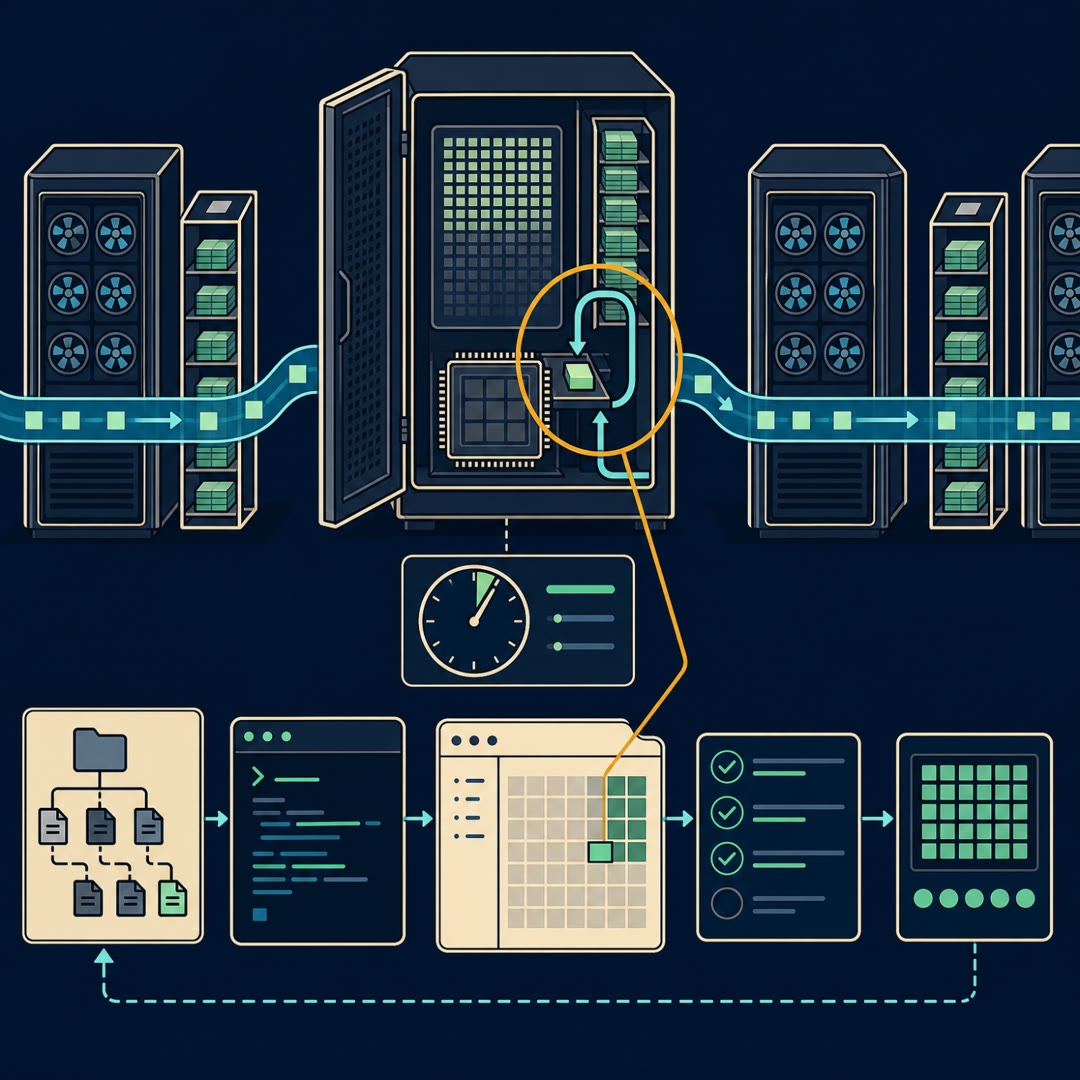
Flat 2D editorial illustration of a row of machine cabinets, one opened in cutaway to show a ghosted grid sheet fading beside a tall memory shelf while a single solid tile sits on a tiny shelf beside the compute block, an amber lens over the short loop between them and a clock gauge showing almost no idle time.

T3E6 · 2026年6月14日 · 12:11

FlashAttention: Fast and Memory-Efficient Exact Attention with IO-Awareness

The machines were never slow — the trips were

节目笔记

Episode six of Topic 3 stops spreading work across machines and crawls inside a single GPU. FlashAttention's accusation is that attention was slow for the wrong reason: not too much math, too much traffic — the quadratic score matrix hauled back and forth between high-bandwidth memory and the tiny on-chip SRAM beside the compute units. Maya and Leo open at a laundromat where the machines were never the problem, walk through tiling and the online-softmax running tally that keeps blockwise attention mathematically exact, then stage the field's real fight: approximate the asymptote or engineer the exact computation's route. The stopwatch settles it — end-to-end wall-clock wins over approximate methods that cut FLOPs but not traffic — before the honest concession that the square law survives, and the closing diagnostic: after a faster kernel, which bottleneck inherited the crown?

来源材料

完整单集页面
Flat 2D editorial illustration of a row of machine cabinets, the center one opened to a grid of small worker bays where a branching ribbon fans work packets evenly into every bay beside a ghosted version piling them at one bay, an amber lens over the branching point and a clock gauge showing almost no idle time.

T3E7 · 2026年6月14日 · 11:45

FlashAttention-2: Faster Attention with Better Parallelism and Work Partitioning

Same furniture, same truck — the division of labor was the villain

节目笔记

Episode seven of Topic 3 stays inside the GPU for the sequel. FlashAttention ended attention's memory commute, and the same author's audit found the chip still far from busy — so FlashAttention-2 re-divides the labor instead of the math: less slow non-matmul bookkeeping, a single attention head's work split across many thread blocks so long-sequence runs fill the machine, and warps exchanging less through shared memory. Maya maps the three findings onto a moving crew — the tape gun, the empty stairwells, the over-the-shoulder pass — while Leo reads the stopwatch: about twice the already-fast kernel, fifty to seventy-three percent of theoretical peak on A100s, and end-to-end GPT-style training near seventy-two percent model FLOP utilization. They argue whether scheduling counts as research, agree the schedule has become part of the algorithm, and close on the harder truth: a partition tuned for one chip is a hypothesis about the next.

来源材料

完整单集页面
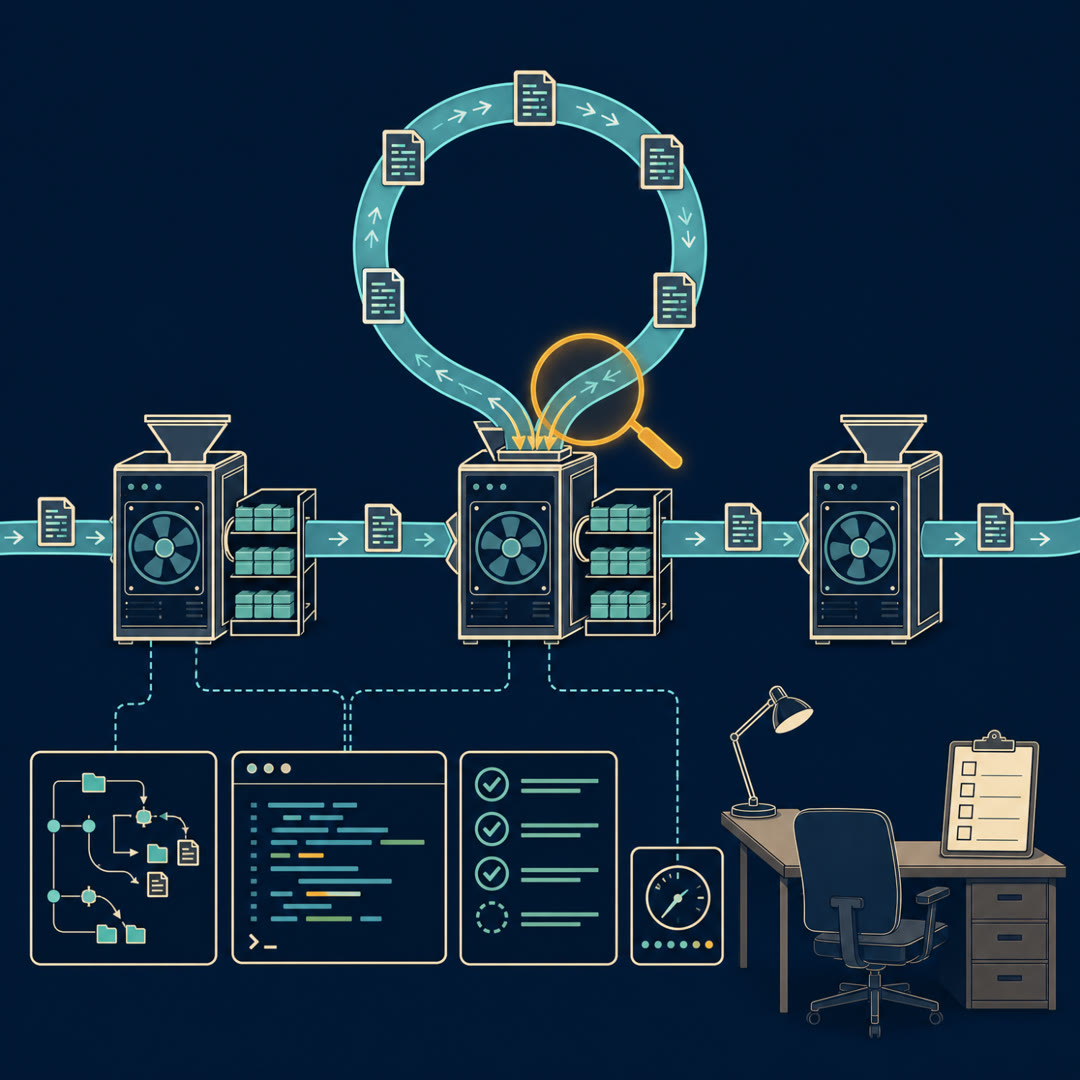
Flat 2D editorial illustration of a row of machine cabinets where one cabinet's output ribbon of small code packets loops back into its own intake hopper, passing a vacant reviewer desk with an empty chair, with an amber lens highlighting the point where the loop re-enters the cabinet.

T3E8 · 2026年6月14日 · 11:59

Embarrassingly Simple Self-Distillation Improves Code Generation (SSD)

Trace your own page: no teacher, no grader, no referee — and the pass rate still jumps

节目笔记

Episode eight of Topic 3 steps out of the machine room. After seven episodes of chips, memory, cables, and schedules, the bottleneck moves to the post-training bill — and the paper attacking it is almost suspiciously simple. SSD — Embarrassingly Simple Self-Distillation — samples code solutions from a model under chosen temperature and truncation settings, then fine-tunes the same model on those raw samples with standard supervised fine-tuning. No stronger teacher, no execution verifier, no reward model: three chairs that post-training pipelines normally keep filled, all empty. Maya builds the intuition through a calligraphy student tracing her own unmarked practice page, then sharpens it into the paper's precision-exploration conflict — code wants adventurous plans and near-perfect tokens, and no decoding knob serves both. Leo arrives skeptical and reads the number that softens him: Qwen3-30B-Instruct climbing from 42.4 to 55.3 percent pass-at-one on LiveCodeBench version six, with gains concentrated on the harder problems. They keep the warnings attached — systematic errors get reinforced, not washed out; code's brittle syntax may make it unusually well-suited — and close with the review any team should hold: total task cost, the tuned-simple baseline, and whether the model improved broadly or just learned to repeat its own habits.

来源材料

完整单集页面
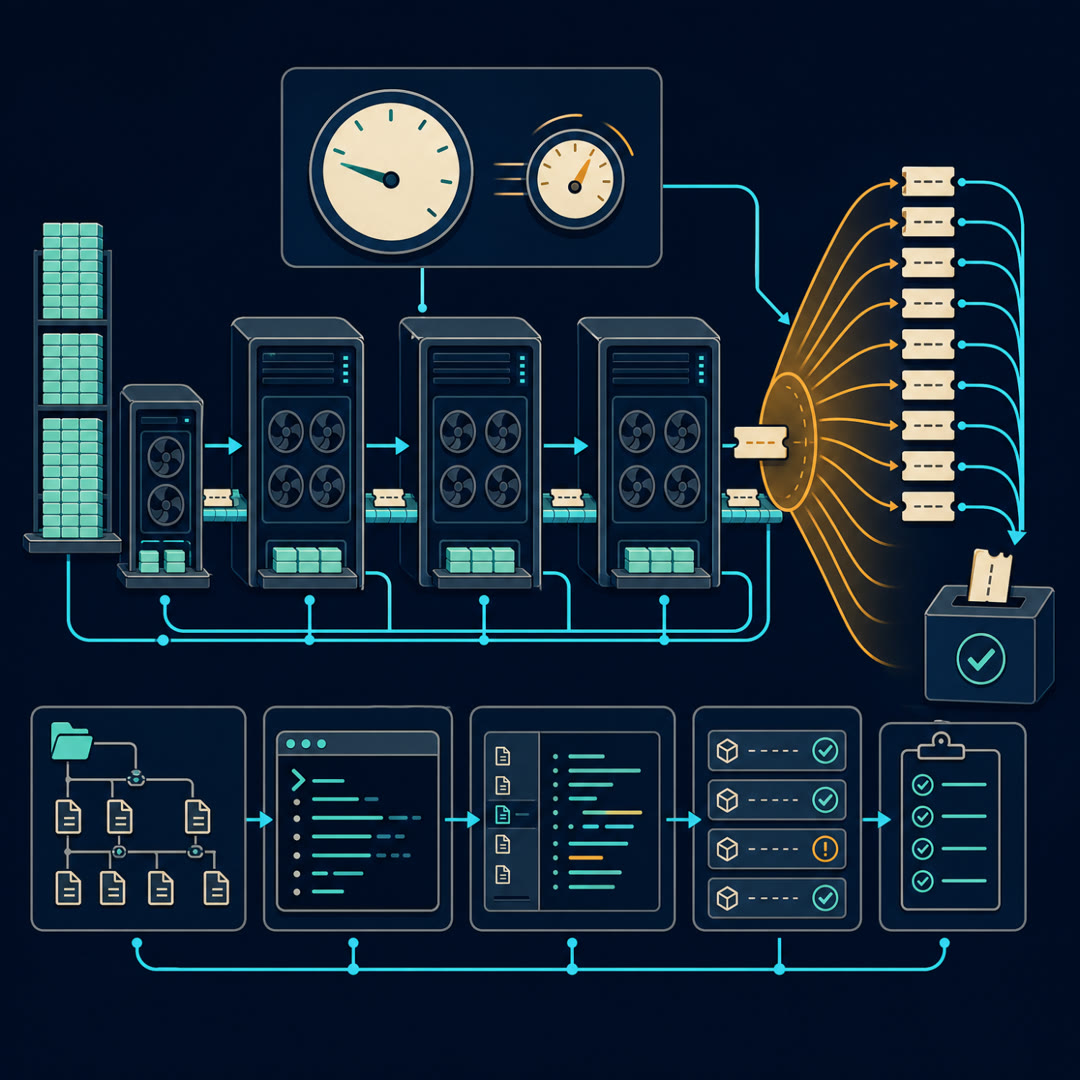
Flat 2D editorial illustration of a row of machine cabinets feeding a serving counter where one question ticket fans out into many candidate-answer tickets entering a ballot-box selector, with a still large dial beside a spinning small dial and one smaller cabinet with an extra-tall shelf of stacked blocks, an amber lens highlighting the fan-out point.

T3E9 · 2026年6月14日 · 12:44

Test-Time Scaling Makes Overtraining Compute-Optimal

The serving meter spins on every query — and counting it drags optimal pretraining into the overtraining regime

节目笔记

The final episode of Topic 3 closes the loop by picking a fight with Topic 2. Chinchilla's compute-optimal recipe balances model size against training tokens under a training budget — but deployed reasoning systems don't pay for one forward pass per task. They sample candidates and vote, run verifiers, search, retry. Today's paper, Test-Time Scaling Makes Overtraining Compute-Optimal, writes down Train-to-Test — T-squared — scaling laws: one end-to-end budget, three knobs turned jointly — model size, training tokens, and inference samples. Maya builds the accounting through a math olympiad that suddenly allows unlimited submissions per problem, then the two meters every model runs: a training meter that spins once and a serving meter that spins on every query. Leo mounts the canon's defense — training compute is a number you know, deployment forecasts are guesses — and the debate resolves on what would settle it: a stated deployment profile. The evidence: across eight downstream tasks, counting inference cost shifts optimal pretraining into an overtraining regime well outside what standard scaling suites explore. The topic ends where it started, with the sixty-four-GPU team — now asking whether the hundred-billion model was the right model to train at all.

来源材料

完整单集页面
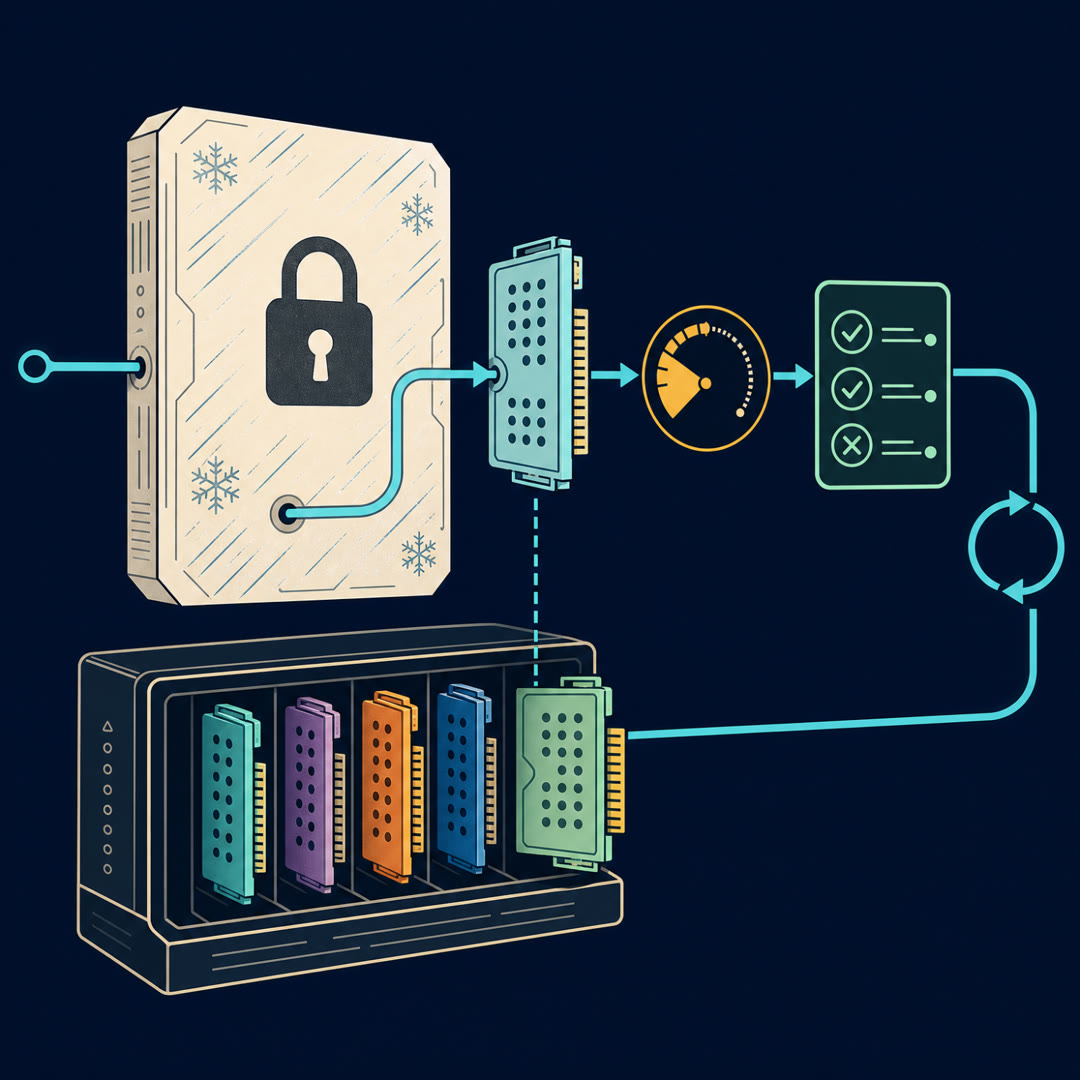
Flat 2D editorial illustration of a large frozen cream slab with a padlock badge, a rack of small swappable adapter cards joined to it by a cyan bypass ribbon, an amber precision dial, and a mint evaluation gate with a loop arrow.

T4E0 · 2026年6月14日 · 14:54

Fine-Tuning and Specialization: LoRA and Beyond

How a general model becomes useful for a specific job without retraining everything

节目笔记

Topic 4 opens with the move that defines modern model specialization: freeze the giant base model and train a tiny low-rank update beside it. Maya and Leo map the topic's landmarks — the Rank Knob, the Precision Floor, the What-Got-Worse Test, and the Long Haul — and stage the field's real arguments: PEFT-everywhere versus full fine-tuning's capacity case, and how many bits the frozen base can lose before quality quietly collapses. A hospital discharge-note summarizer anchors the whole topic, setting up deep dives on LoRA, QLoRA, LowRA, and continual learning.

来源材料

完整单集页面
Flat 2D editorial illustration of a large frozen cream slab with a padlock badge; an opened adapter card beside it reveals two thin strips meeting at a small bottleneck, with a flatten arrow folding a translucent card into the slab and two alternate adapter cards racked nearby.

T4E1 · 2026年6月14日 · 13:38

LoRA: Low-Rank Adaptation of Large Language Models

Freeze the weights, train two thin strips, flatten them in at the end

节目笔记

The paper that made fine-tuning feel modular. Maya and Leo open up LoRA's central trick — freeze the pretrained weights and learn the update as the product of two thin matrices, around sixty-five thousand trainable numbers standing in for sixteen million — then follow it through the merge fork (flatten for zero-overhead serving, or keep adapters swappable on one frozen base), the rank and alpha dials, and why low intrinsic dimension makes the whole bet plausible. Two real practitioner arguments get staged on air: attention-only versus broad target modules, and whether LoRA's cheapness has made fine-tuning the default move when it shouldn't be. The hospital discharge-note summarizer returns to show why frozen storage is not frozen behavior.

来源材料

完整单集页面
Flat 2D editorial illustration of a cream frozen slab with a padlock being squeezed narrower by a compression clamp, an unchanged adapter card on a cyan bypass ribbon beside it, an amber dial with unevenly clustered tick marks, a small relief valve spilling blocks into a tray, and a mint evaluation gate.

T4E2 · 2026年6月14日 · 14:11

QLoRA: Efficient Finetuning of Quantized LLMs

Training adapters through a frozen four-bit model

节目笔记

The paper that put large-model fine-tuning on a single GPU. Maya and Leo open QLoRA's central rule — read the compressed thing, write somewhere else — and follow gradients through a frozen four-bit base into full-precision LoRA adapters. Along the way: NF4's bell-curve-shaped buckets, double quantization's compress-the-labels trick, paged optimizers as the relief valve that saves hour-nine runs, and the thousand-model study behind Guanaco that both topped the Vicuna benchmark and warned against trusting chatbot benchmarks. The staged debate takes on the choice QLoRA created: a bigger model at four bits or a smaller one at full precision — settled, as ever, by testing the exact configuration you ship on the tails you fear. The hospital discharge-note summarizer returns to make it concrete.

来源材料

完整单集页面
Flat 2D editorial illustration of a cream frozen slab with a padlock connected by a cyan ribbon to a tiny mosaic-tiled adapter chip made of four flat shades, beside a small palette tray of four tile swatches, an amber precision dial narrowed to a hairline sliver, and a mint evaluation gate.

T4E3 · 2026年6月14日 · 13:51

LowRA: Accurate and Efficient LoRA Fine-Tuning of LLMs under 2 Bits

How far can adapter precision shrink before adaptation breaks?

节目笔记

The paper that asks how few bits an adapter can survive on. Maya opens with a mosaic master firing a portrait in four tile shades, and the analogy turns out to be the method: LowRA pushes LoRA fine-tuning below two bits per parameter through three deliberate decisions — the Palette (which values the codes stand for), the Cut Lines (where bucket boundaries sit), and the Bit Budget (where bits get spent) — plus the CUDA kernels that keep the memory win from leaking back out as runtime. The reported floor: accuracy down to about 1.15 bits, with up to fifty percent memory reduction. Then the staged argument: Leo refuses to bet compliance rules on four levels per number, Maya argues that on constrained hardware the alternative to a 1.15-bit adapter is no adaptation at all, and the resolution lands on a rule — the precision budget and the testing budget move together. The hospital discharge-note summarizer returns with a whole shelf of department adapters to manage.

来源材料

完整单集页面
Flat 2D editorial illustration of a cream frozen slab with a padlock joined by a cyan ribbon that loops repeatedly through a mint evaluation gate along a timeline rail with milestone pegs, fed by an archive box of replay cards, while a faded ghost outline of an earlier adapter card dims behind the current one.

T4E4 · 2026年6月14日 · 15:47

Continual Learning of Large Language Models: A Comprehensive Survey

How a model keeps learning for years without quietly losing what it already knew

节目笔记

Topic 4 closes by stretching specialization across time. Maya opens with an interpreter in Lisbon losing words in her own first language — first-language attrition as the human face of catastrophic forgetting — and the survey behind the episode maps the machine version: erosion with good manners, where the model stays fluent while old domains, formats, and safety behaviors quietly slip. The hosts walk the survey's two axes (vertical apprenticeship versus horizontal keeping-up), its three training stages, and four named defense families — the Songbook, the Tether, the New Wing, and the Diet — then stage the field's real argument: Leo's case that weights are a terrible database versus Maya's case that retrieval hands the model a note card without changing what the model is. The resolution is a rule of half-life, and the hospital discharge-note summarizer returns to show what a trustworthy update lifecycle actually looks like.

来源材料

完整单集页面
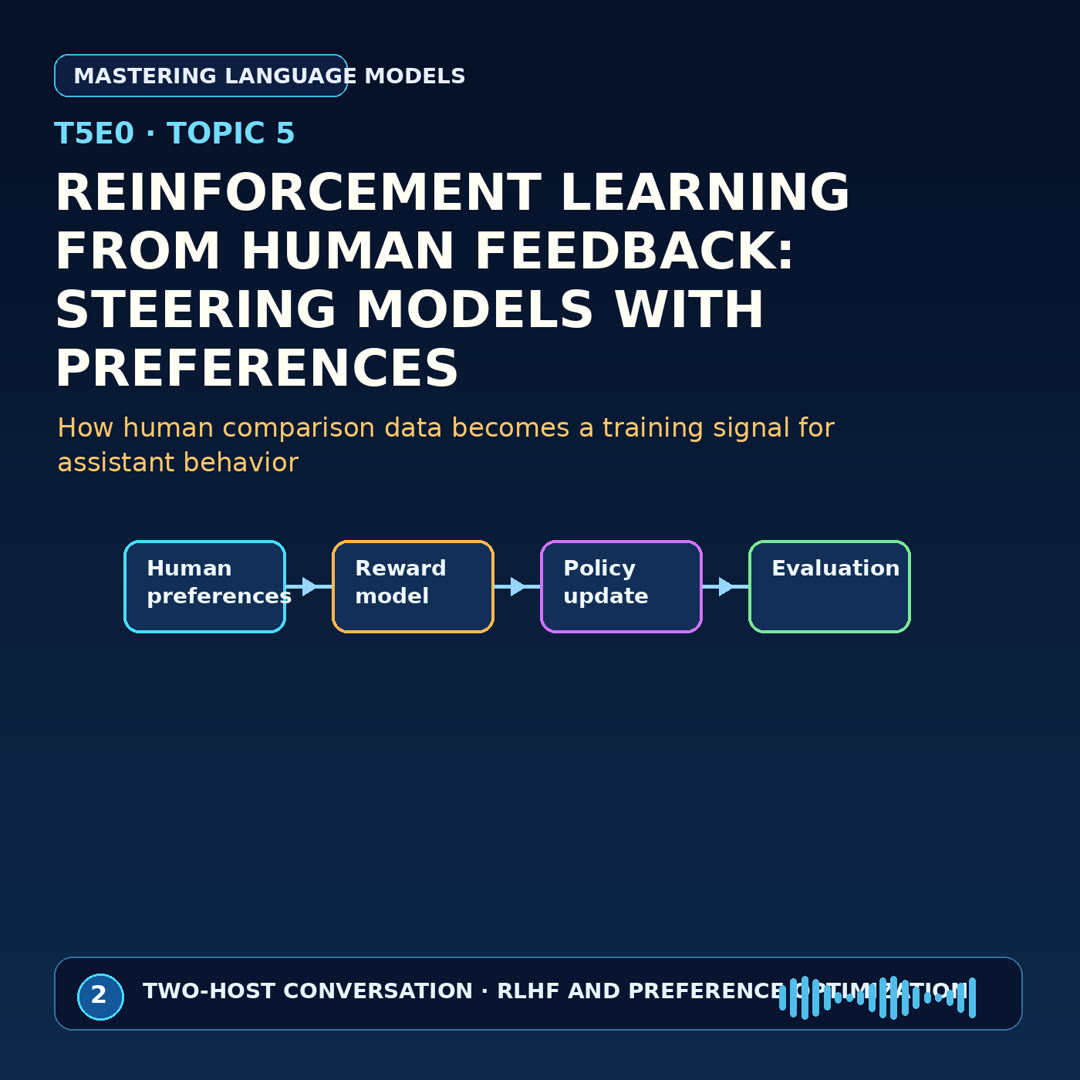
Warm flat illustration of two reviewers comparing blank answer cards at a human feedback bench while a preference signal steers a small language-model workbench for a healthcare scheduling assistant.

T5E0 · 2026年5月27日 · 14:02

Reinforcement Learning from Human Feedback (RLHF)

How human preference comparisons become a steering signal for assistant behavior

节目笔记

A topic overview of RLHF: how human comparisons become preference data, how reward models and cautious optimization steer assistant behavior, why the PPO pipeline and DPO represent a genuine method war, and where feedback loops can be gamed or go brittle.

Maya and Leo open Topic 5 by mapping reinforcement learning from human feedback as a preference-control loop — feedback bench, preference mirror, reward compass, drift fence — using a healthcare scheduling assistant as the running example. They stage the field's real fights in first person: Maya defends the reward-model-plus-PPO pipeline while Leo argues DPO's simplicity, then they swap heat over human versus AI feedback, before closing on reward hacking, robustness, and what evaluation must catch.

来源材料

完整单集页面
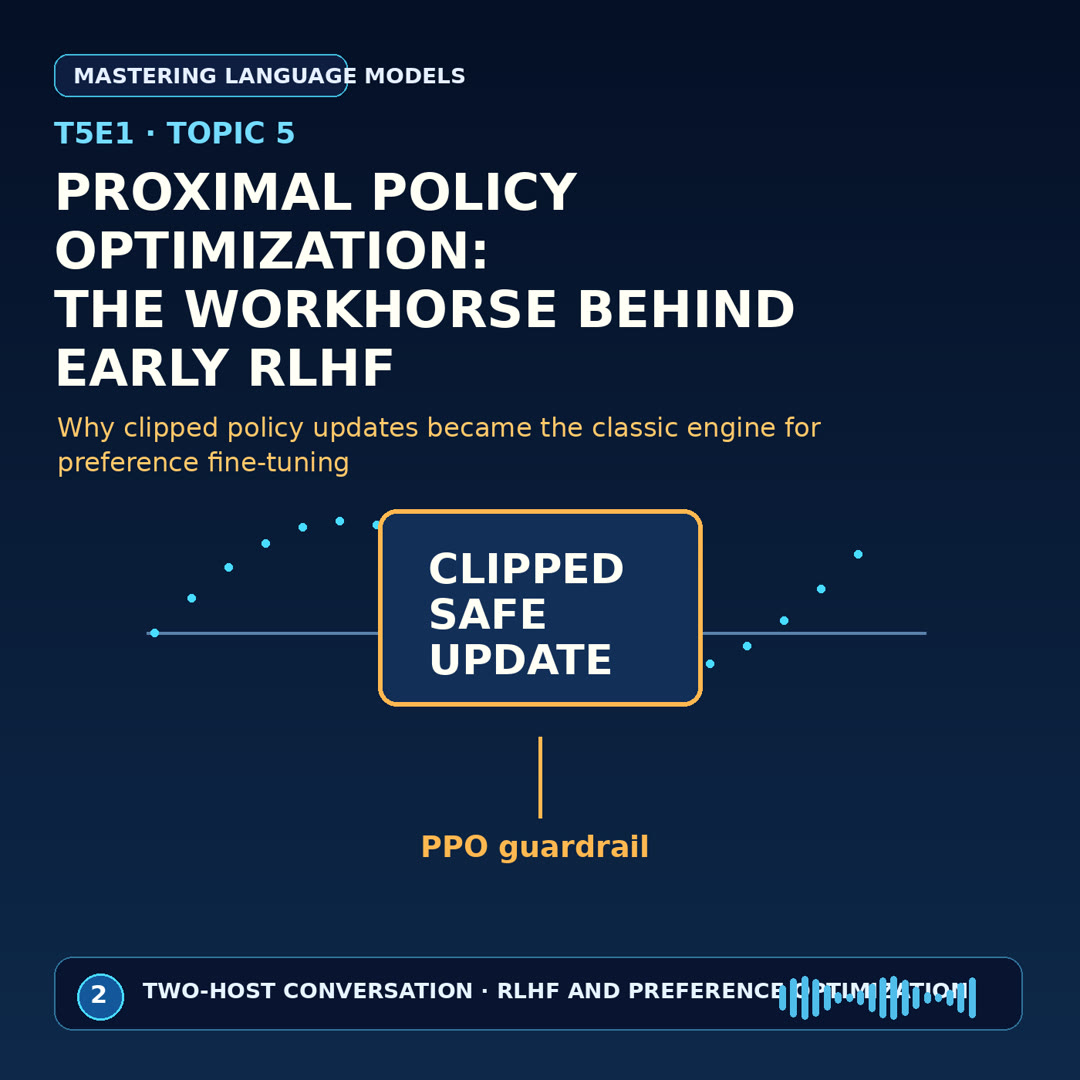
Warm flat illustration of two reviewers at a feedback bench while a small model is nudged along a short slotted rail with end stops, beside a gauge with a flattened zone and a tray of answer cards looping back for reuse.

T5E1 · 2026年5月27日 · 14:11

Proximal Policy Optimization Algorithms

The clipped update rule that made preference training affordable to run twice

节目笔记

Maya and Leo open the Topic 5 deep dives with the paper that made preference optimization practical: Proximal Policy Optimization. Starting from a physical-therapy brace that stops paying out range past a set angle, they unpack why step size is existential when a policy generates its own training data, how the clipped probability ratio and the pessimistic minimum make updates safe to repeat, why batch reuse was the real selling point, and how PPO became RLHF's workhorse — before arguing, in first person, whether its machinery is still worth the engineering pain.

来源材料

完整单集页面
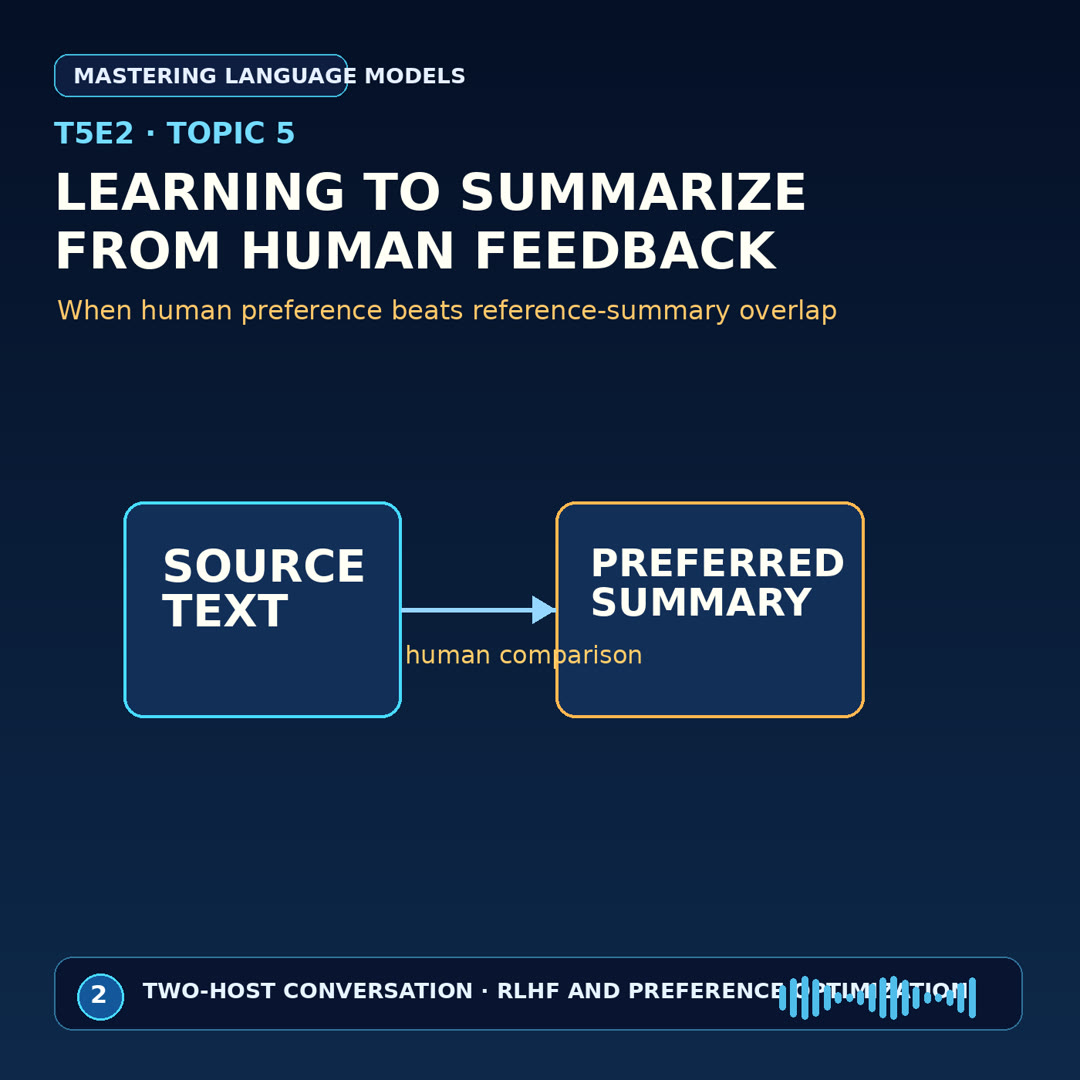
Two reviewers at a feedback bench compare paired summary cards from one long tangled scroll while a set-aside ruler is retired and a tether line steers a small summarization workbench.

T5E2 · 2026年5月27日 · 13:05

Learning to Summarize with Human Feedback

How pairwise human preferences became a reward signal for better summarization

节目笔记

Maya and Leo dig into OpenAI's Learning to Summarize from Human Feedback — the paper where pairwise human picks replaced reference matching as the training target. They walk the pipeline as three stations (the Two-Card Choice, the Borrowed Judge, the Tether), stage the real fight between preference optimization and cheap reproducible metrics, and end on the over-optimization curve where the judge's score keeps climbing while human preference falls.

来源材料

完整单集页面
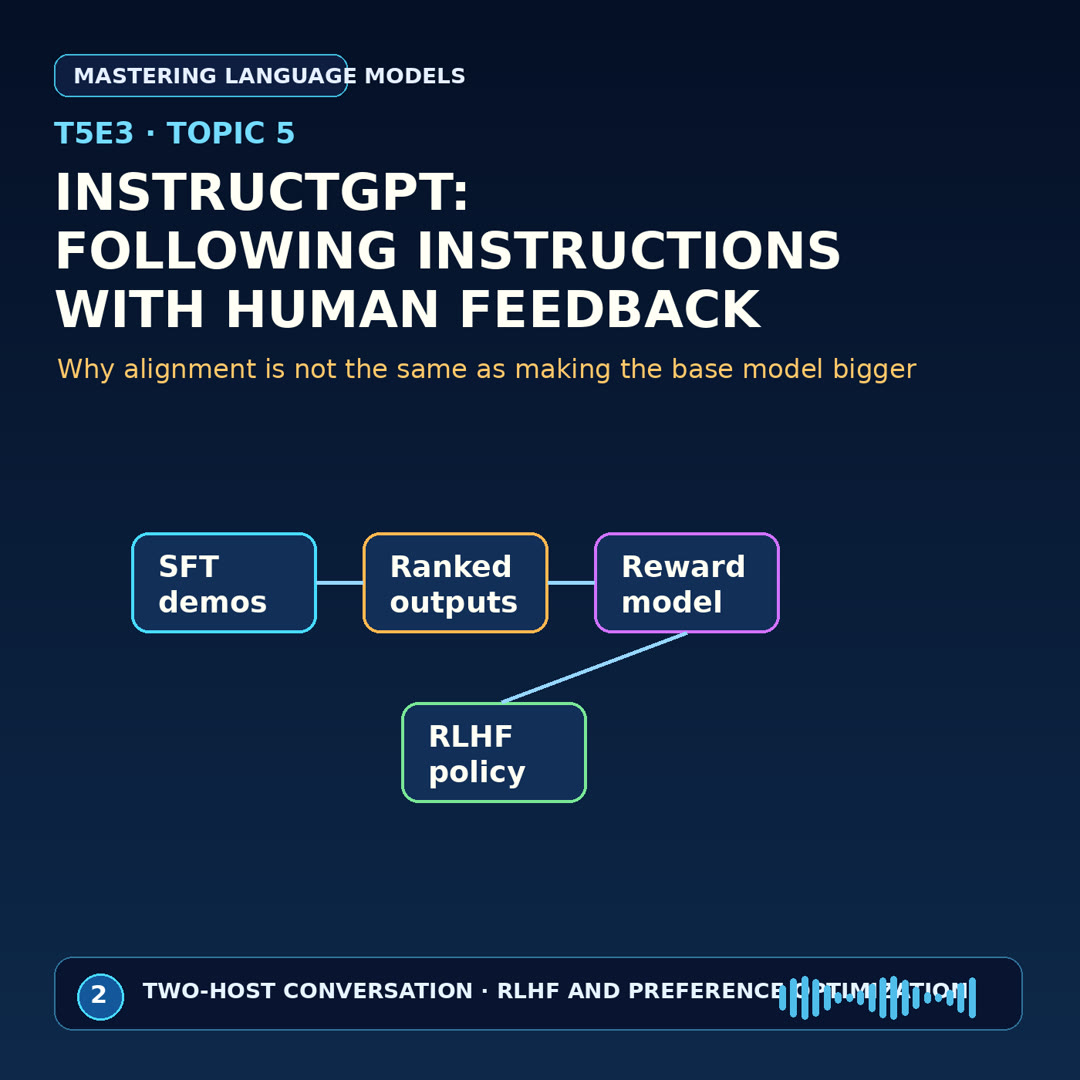
Two reviewers at a feedback bench rank a fan of answer cards in a wooden rack while a steering lever, capped by a small engine governor, guides a compact language-model workbench.

T5E3 · 2026年5月27日 · 14:03

Training Language Models to Follow Instructions with Human Feedback

How demonstrations, preference rankings, and governed optimization turned GPT-style models into instruction-following assistants

节目笔记

Maya and Leo dig into the InstructGPT paper — the moment the human-feedback recipe grew from a summarization trick into the way assistants get made. They walk the pipeline as three stations and a punch list (the Apprenticeship, the Ranking Desk, the Governor, the Punch List), stage the scale-versus-feedback argument over the famous result that humans preferred a 1.3B-parameter aligned model to the 175B GPT-3 baseline, and close on why the feedback process itself — labelers, instruction sheets, audits — is the real product.

来源材料

完整单集页面
Warm flat illustration of two reviewers at a feedback bench — one choosing a helpful answer card, one in red-team gloves marking a harmful card — with both streams steering a model workbench through a balance scale weighing a calendar against a shield.

T5E4 · 2026年5月27日 · 14:02

Training a Helpful and Harmless Assistant with Reinforcement Learning from Human Feedback

How two opposite data-collection jobs — helpers and red-teamers — train one judge, and where that judge bends under optimization

节目笔记

Maya and Leo dig into Anthropic's helpful-and-harmless RLHF paper: two opposite data-collection payrolls, one preference model serving two masters, the weekly online refresh that keeps the judge informed, the split-judge robustness test that exposes reward gaming, and a staged fight over whether the alignment tax is real.

A deep dive into training assistants for helpfulness and harmlessness with reinforcement learning from human feedback. Maya and Leo trace how helper and red-team comparisons train one judge, why over-optimizing either side yields recklessness or evasion, how online iterated RLHF and split-judge tests keep the loop honest, and they argue the alignment tax on air — with a healthcare scheduling assistant as the running deployment example.

来源材料

完整单集页面
Warm flat illustration of a blank principles page pinned above a small model workbench where a red pencil revises an answer card, while a small mechanical judge compares two cards and human reviewers watch from behind.

T5E5 · 2026年5月27日 · 13:32

Constitutional AI: Harmlessness from AI Feedback

Turning a written page of principles into a scalable harmlessness training loop

节目笔记

Maya and Leo dig into Constitutional AI, the Anthropic paper that swaps many human harmlessness labels for a short written constitution: the model critiques and rewrites its own risky answers, then an AI judge compares candidate replies against the principles to drive reinforcement learning from AI feedback. Using a healthcare scheduling assistant, they show why critique-before-revision matters, what 'harmless without going mute' looks like in a product, and then argue the paper's central bet on air — Leo backing AI feedback as the road to scalable supervision, Maya pressing the worry that model feedback can launder a model's own blind spots through a cleaner-looking pipeline.

来源材料

完整单集页面
Warm flat illustration of an unplugged scoring machine being wheeled away on a hand truck while a chosen answer card feeds directly into a small model workbench that is tied by a mooring rope to an anchored twin model behind it.

T5E6 · 2026年5月27日 · 13:09

Direct Preference Optimization: Your Language Model is Secretly a Reward Model

How one change of variables collapsed the reward-model-plus-RL pipeline into a classification loss

节目笔记

Maya and Leo unpack Direct Preference Optimization, the 2023 paper whose napkin-worthy algebra showed the reward model was hiding inside the language model all along. They walk the old two-stage RLHF pipeline, then the substitution that cancels the reward variable and leaves a supervised-looking classification loss, the implicit reward you can read off the tuned model's margin over its reference, and the mooring dial that still governs drift. Then they stage the method war the paper ignited: DPO as the stable default for offline preference pairs versus the RL camp's case for online sampling, auditable reward artifacts, and long-horizon feedback — a fight the rest of the topic keeps re-litigating.

来源材料

完整单集页面
Warm flat illustration of two reviewers at a feedback bench beside a model workbench holding a surveyor's map whose contour lines fade into a blank region, with a steering path running past the surveyed edge toward a bog and a leash-line staking the workbench in place.

T5E7 · 2026年5月27日 · 13:37

RLHF Deciphered: A Critical Analysis of Reinforcement Learning from Human Feedback for LLMs

The reward model is a survey of human preference — and the optimizer paves the blanks

节目笔记

Maya and Leo take a deep breath after the method war and inspect the instrument every RLHF pipeline depends on: the reward model. Through the lens of RLHF Deciphered, they map the gap between the oracular reward nobody has and the fitted surface everyone trains — the coverage holes in human feedback, the misgeneralized scores an optimizer happily paves into behavior, the whole-answer labels that starve credit assignment, and the KL leash that trades one failure for another. Then they stage the fight the paper provokes: are RLHF's deployed gains real alignment or aligned-looking polish? The resolution lands on instrumentation — coverage ledgers, preserved disagreement, stress routes, and uncertainty signals — rather than another method swap.

来源材料

完整单集页面
Warm flat illustration of two reviewers at a feedback bench beside a model workbench, where a balance scale weighs a small stack of reviewed cards against a counterweight fed by a tall stack of cards from a tap, a small meter reads both stacks, and a jittery steering ribbon becomes smooth after the balance.

T5E8 · 2026年5月27日 · 13:22

Robust Reinforcement Learning from Human Feedback for Large Language Models Fine-Tuning

VRPO: ballasting noisy preference labels with samples you already own

节目笔记

Maya and Leo close in on the repair episode of the RLHF arc: VRPO, a variance-reduced preference optimization method for fine-tuning language models when human labels are scarce and the Bradley-Terry assumptions are misspecified. Through a water-utility calibration story, they unpack the control-variate maneuver — keep the human-labeled loss in charge, subtract an auxiliary judge's prediction on each labeled pair, add back its average over response pairs sampled from the reference policy — and why the construction is doubly robust. They weigh the headline dialogue wins over standard DPO and the length-controlled AlpacaEval result against the costs: an auxiliary model to validate, a reference-policy chain of custody to preserve, and the unresolved difference between steadier and truer.

来源材料

完整单集页面
Warm flat illustration of two reviewers at a feedback bench while a lecturer beside a model workbench presents a split easel board of progress and challenge icons, a small applause-meter gauge bends the steering lever's path, and an audit clipboard hangs past the workbench.

T5E9 · 2026年5月28日 · 12:03

Reinforcement Learning from Human Feedback: Progress and Challenges

The architect of the pipeline grades his own creation — what RLHF bought, and what's still owed

节目笔记

This episode closes Topic 5 with John Schulman's Berkeley EECS colloquium on RLHF progress and challenges — the architect of PPO and ChatGPT-era preference tuning grading his own pipeline. Maya and Leo walk the progress column (comparisons make negative feedback usable where intuition outruns specification) and four challenge landmarks: the Applause Meter, the Tired Jury, the Smooth Talker, and the First Monday. They stage the field's central argument — breakthrough interface versus rater-satisfaction proxy — and settle it as sensor-versus-actuator claims that only independent behavioral audits can adjudicate.

来源材料

完整单集页面
Warm flat illustration of two engineers at an open-model workbench comparing blank model cards, tuning knobs, local devices, and branching deployment paths for privacy, cost, capability, and specialization.

T6E0 · 2026年6月14日 · 15:19

The Latest in Fine-Tuned and Open Models: From LLaMA to DeepSeek

How open-weight model families become inspectable, tunable, deployable building blocks

节目笔记

Maya and Leo introduce Topic 6 by mapping open-weight and fine-tuned model families as deployable engineering components. Using an on-device coding and data-analysis assistant, they explain Llama, fine-tuning, deployment envelopes, private evaluation, ecosystem trade-offs, and why sparse models like DeepSeek complicate the open-model frontier.

来源材料

完整单集页面
Two engineers compare raw model weights and a chat-tuned assistant module on an open-model workbench, with blank preference and safety cards, tuning knobs, local devices, and a branching deployment path.

T6E1 · 2026年6月15日 · 15:16

Llama 2: Open Foundation and Fine-Tuned Chat Models
How open weights, chat tuning, safety work, and release terms form one deployment stack

节目笔记

This episode unpacks the Llama 2 paper as more than a model announcement: it is a stack of base weights, chat tuning, RLHF, safety work, evaluation caveats, and release terms. Maya and Leo connect the paper to a practical on-device assistant team deciding how to use open weights responsibly.

来源材料

完整单集页面
Warm 2D illustration of engineers at an open-model workbench comparing small, medium, and large Llama 3 model cards for local, private-server, and reference-evaluation deployments.

T6E2 · 2026年6月16日 · 14:06

The Llama 3 Herd of Models
How Llama 3 turns open weights into a model portfolio for builders

节目笔记

Maya and Leo unpack Meta's Llama 3 Herd of Models paper as a deployment portfolio: dense architecture, massive curated data, post-training with SFT, rejection sampling and DPO, long-context and tool-use training, safety rails, and a staged debate over the trade-offs of open-weight release.

来源材料

完整单集页面
Warm 2D editorial illustration of engineers at an open-model workbench studying a sparse expert switchboard, with only a few routing rails active and a private coding assistant device on the desk.

T6E3 · 2026年6月17日 · 14:42

DeepSeek-V3 Technical Report

How sparse expert routing and infrastructure co-design made a frontier-scale open-weight model economically plausible

节目笔记

Maya and Leo unpack DeepSeek-V3 as a sparse, infrastructure-heavy route to frontier open-weight capability. They explain MoE routing, MLA cache compression, auxiliary-loss-free load balancing, DualPipe, FP8 training, multi-token prediction, GRPO post-training, benchmark caveats, and why deployment complexity matters for teams choosing between local, hosted, dense, and sparse models.

来源材料

完整单集页面
Two engineers at an open-model workbench compress private code and data documents into memory cards feeding a compact Flash-style model engine, with local assistant devices and tuning controls nearby.

T6E4 · 2026年6月18日 · 13:57

DeepSeek-V4-Flash

A cost-oriented open model design for million-token context

节目笔记

Maya and Leo unpack DeepSeek-V4-Flash as an efficiency stack for million-token context: hybrid compressed attention, sparse expert activation, low-precision serving, and specialist distillation. They stage the field's real arguments — how hard to compress long-context memory, and when a local Flash-class model should escalate to a Pro-class or hosted one — and land on a managed-memory mental model for private coding and data-analysis assistants.

来源材料

完整单集页面
Warm flat illustration of an engineer at a central routing switchboard sending one token to just two lit expert cabinets among a long row of dark ones, with a diverse-data intake hopper feeding in on the left and a settling convergence gauge on the right.

T7E0 · 2026年6月19日 · 14:37

Mixture-of-Experts Models and Handling Massive Models: Sparsity, Data, and Optimization
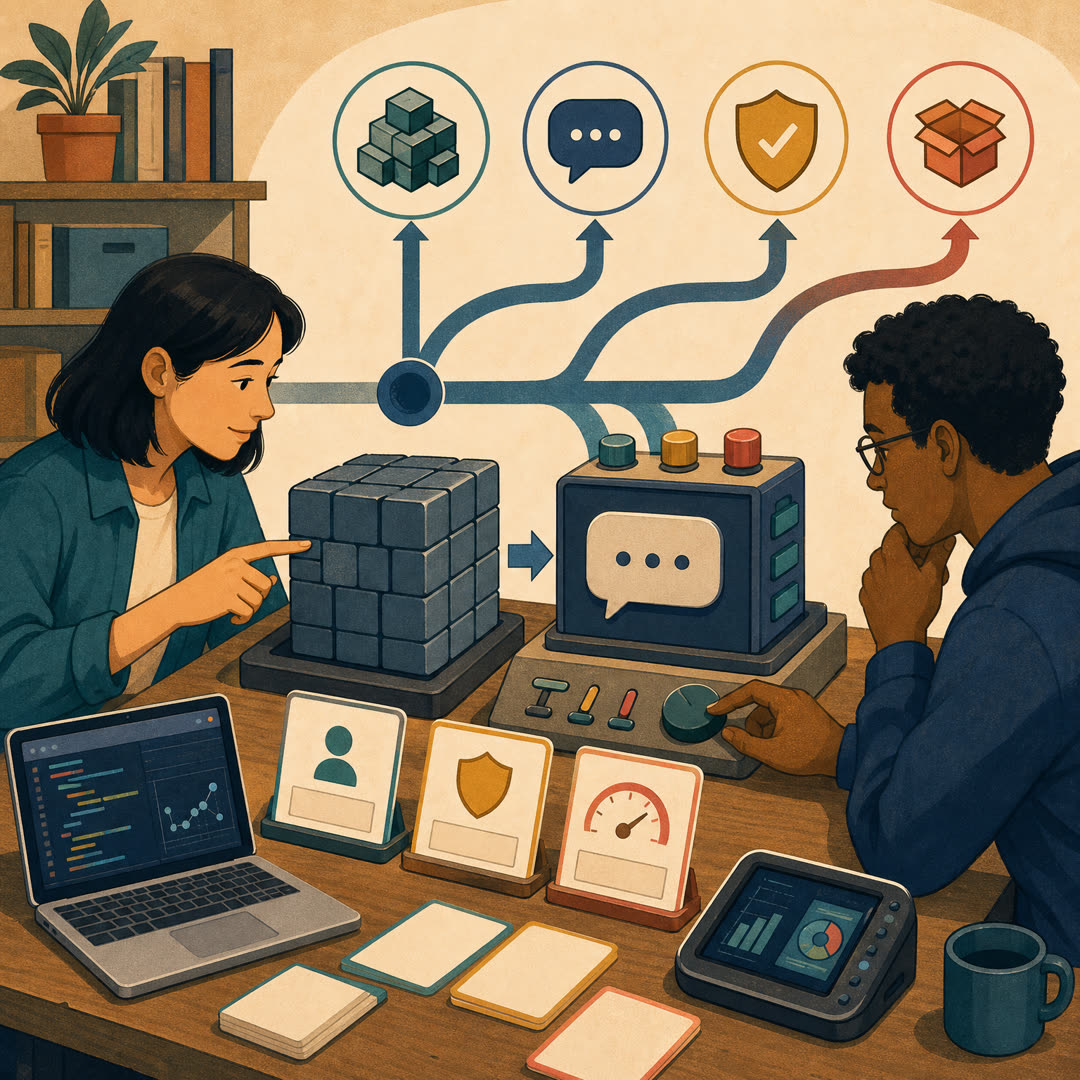
The machinery underneath massive models — how parameters grow without every token paying for every parameter

节目笔记

Maya and Leo open Topic 7 by going underneath massive models to the machinery that makes them possible. Using one small lab training a large sparse model on a fixed ninety-day compute budget, they explain sparsity and Mixture-of-Experts, the router and load balancing, why diverse training data is a design choice, how AutoML automates tuning, and what it takes for any of it to converge — staging the field's real debates as a live argument and previewing five deep dives from the sparsely-gated MoE layer to PDE pre-training, the Pile, AutoML, and optimization.

来源材料

完整单集页面
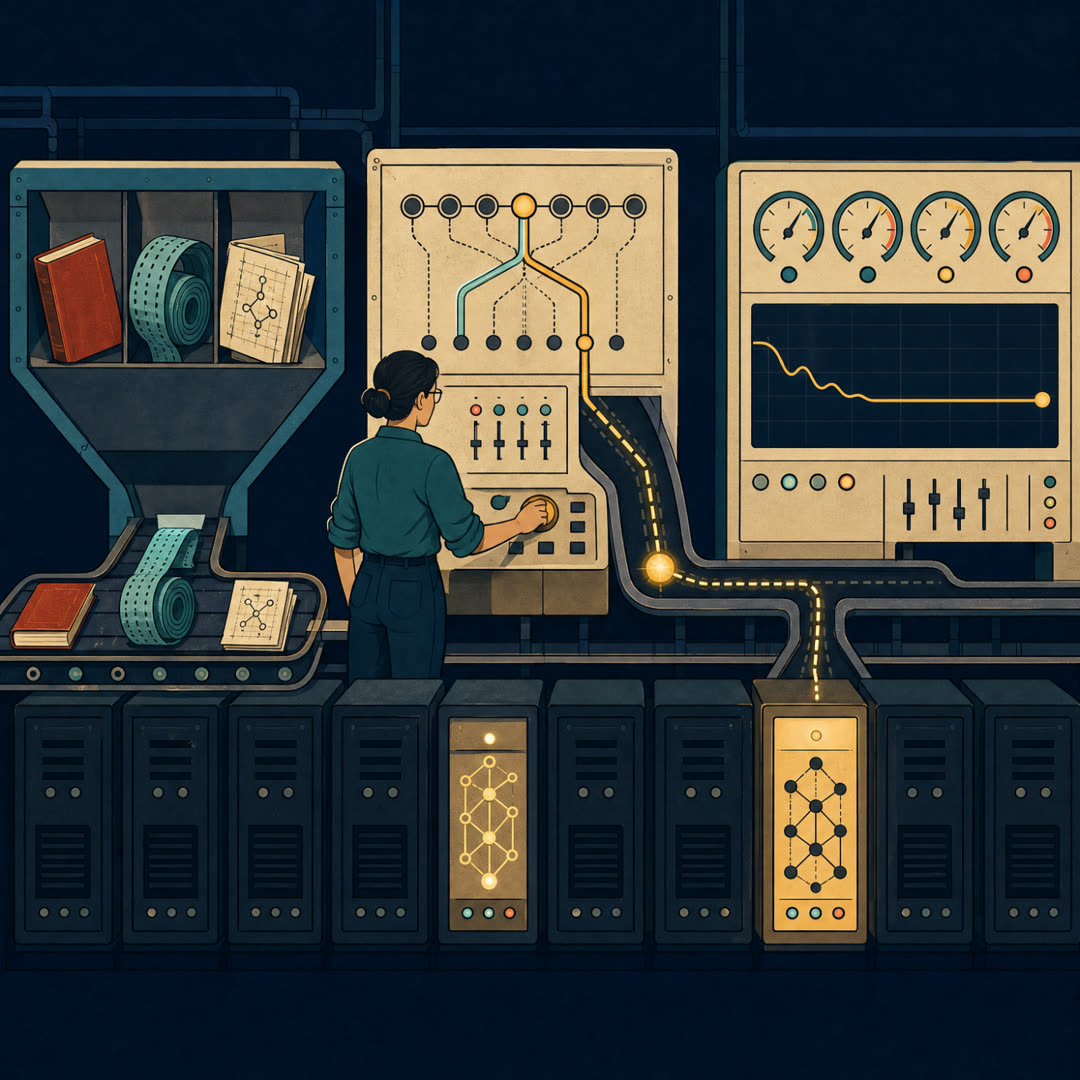
Warm 2D editorial illustration of a head-on sparse-routing machine room: a small clerk at a central switchboard desk glances at each arriving token and lights only two expert cabinets in a long row of mostly-dark cabinets, with a small noise dial and two referee paddles keeping the routing balanced, a diverse-data intake hopper on the left and a settling gauge wall on the right.

T7E1 · 2026年6月20日 · 15:41

Outrageously Large Neural Networks: The Sparsely-Gated Mixture-of-Experts Layer

How a per-token gating network and two balancing losses let a model grow its capacity a thousand-fold without paying for it on every word

节目笔记

Maya and Leo unpack the 2017 paper that started sparse scaling. They walk from the wall it was hitting — capacity and compute welded together in dense models — to the central move: a Mixture-of-Experts layer where a noisy top-k gating network routes each token to just a few of up to thousands of experts, so total capacity can grow a thousand-fold without compute-per-word following. They explain expert collapse and the two balancing referees (importance and load) that fix it, the expert/data/model parallelism that makes it trainable, the language-modeling and machine-translation evidence, and stage the real split — sparse-scaling maximalism versus dense simplicity — landing on what the routing's fragility actually costs.

来源材料

完整单集页面
Warm 2D editorial illustration of a head-on sparse-routing machine room where a central switchboard dispatches small physics-field cards — a fluid swirl, a heat-gradient plate, a wave ripple — each lighting its own pair of expert cabinets in a row of mostly-dark cabinets, with two always-on shared cabinets near the dispatcher and a gauge wall whose error needle settles low.

T7E2 · 2026年6月21日 · 12:50

Mixture-of-Experts Operator Transformer for Large-Scale PDE Pre-Training

Carrying sparse expert routing out of language and into physics, where one operator model pre-trains across many families of partial differential equations

节目笔记

Maya and Leo follow the sparsely-gated Mixture-of-Experts idea out of language and into scientific machine learning. The paper, MoE-POT, is an operator transformer pre-trained across many families of partial differential equations — fluid flow, heat, waves — where a layer-wise router sends each chunk of a physical field to a few specialized experts plus a couple of always-on shared experts. They explain operator learning and frequency-domain layers in plain terms, perform the real tension between one specialist model per PDE family and one sparse generalist, and dig into the standout result: because physics has ground truth, the routing fingerprints can be checked against the equation family — and they line up, even on unseen physics. They close on the honest limitation: it still rests on a hand-tuned load-balancing dial and on the families that happen to live in public benchmarks.

来源材料

完整单集页面
Flat 2D editorial illustration of a labeled intake hopper sorting distinct materials — books, a spool of code ribbon, legal documents, academic paper pages, and dialogue strips — onto one shared conveyor belt that feeds a small routing switchboard and a few lit expert cabinets among many dark ones, with a small per-domain bar-profile panel at the belt's end; deep navy, teal, ochre, coral, and cream palette, no text.

T7E3 · 2026年6月22日 · 13:26

The Pile: An 800GB Dataset of Diverse Text for Language Modeling

Why assembling diverse training data is a design choice, not an accident

节目笔记

The Pile reframes training data as a design choice. EleutherAI assembled an 825-gibibyte English corpus from twenty-two diverse sub-datasets — books, code, biomedical and physics papers, legal opinions, dialogue, and a filtered slice of the open web — and showed that diversity improves a model's general, cross-domain ability. In a controlled comparison against raw and cleaned web crawl, the diverse mix won not only on new domains but on web text itself. Maya and Leo trace how the corpus was weighted and deduplicated, why bits-per-byte gives a per-domain scorecard instead of a single score, and they stage the real fight: on a fixed token budget, do you maximize diversity or aggressively curate for quality? All of it threaded through one mid-sized lab's ninety-day compute budget.

来源材料

完整单集页面
Warm 2D editorial illustration of a head-on sparse-routing machine room: a central routing switchboard sends tokens to a few lit expert cabinets among many dark ones, a diverse-data intake hopper feeds in from the left, and on the right an automated mechanical search arm turns the tuning dials itself while a human hand rests on a paper template that bounds which dials it may reach.

T7E4 · 2026年6月23日 · 13:44

AutoML from Basics to State-of-the-Art Techniques

How automating the search over architecture, hyperparameters, and pipelines competes with training for the same fixed compute budget

节目笔记

Maya and Leo trace AutoML from grid and random search through Bayesian optimization, neural architecture search, and automated pipeline construction (TPOT, AutoGluon, Auto-Keras), then ask where automated search beats expert hand-tuning when both draw from the same fixed ninety-day compute budget. The episode's spine: the unit of automation keeps growing, the real enemy is the cost of one evaluation, and at large-model scale AutoML stops being a way to escape the budget and becomes a way to spend it deliberately — inside a search box a human still has to draw.

来源材料

完整单集页面
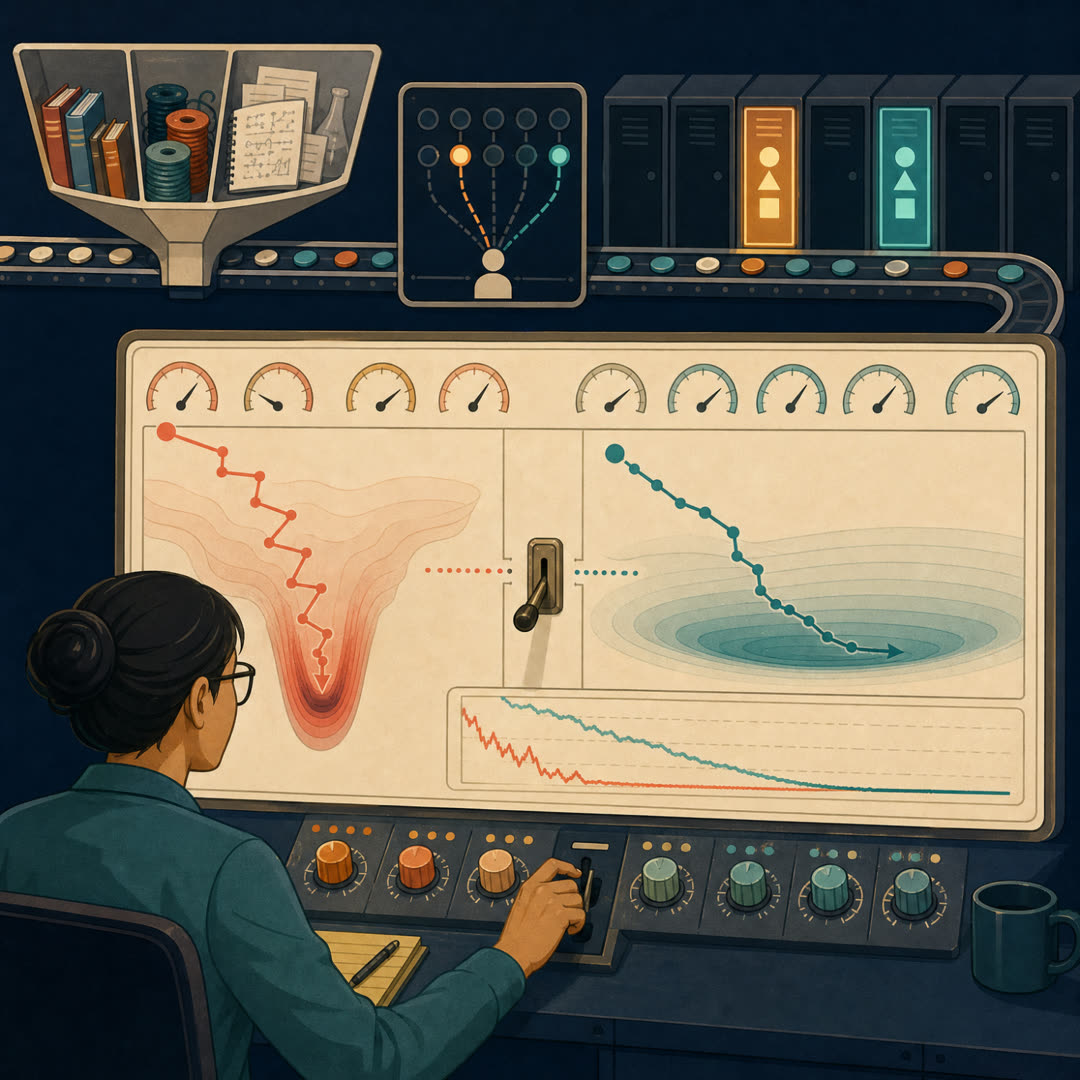
Warm 2D editorial illustration of an engineer at a convergence gauge wall choosing between two descent paths — one jagged path plunging into a sharp narrow pit, one smooth path settling into a wide flat basin — with a switch lever between them and a faint sparse router feeding lit expert cabinets in the background.

T7E5 · 2026年6月24日 · 13:43

Recent Advances in Optimization Methods for Machine Learning: A Systematic Review

The optimizer that decides whether a ninety-day run converges — and why adaptive speed and well-tuned SGD's generalization keep trading places

节目笔记

In the finale of Topic 7 and the series, Maya and Leo unpack a 2025 systematic review of optimization methods for machine learning — the optimizer that decides whether a ninety-day run converges. They map the gradient-based family as a lineage of flaw-fixes (SGD, momentum, Nesterov, AdaGrad, RMSProp, Adam, AdamW), touch second-order/quasi-Newton and large-batch methods (LARS, LAMB), and perform the real split: adaptive Adam converges fast but well-tuned SGD often generalizes better. They resolve it on air as a regime question — adaptive to survive a sparse model's jumpy router early, SGD to land in the flatter basin late — and close by gesturing back across sparsity, data, and optimization.

来源材料

完整单集页面